Industries That Benefit Most from BMTC Bus Branding in Bangalore
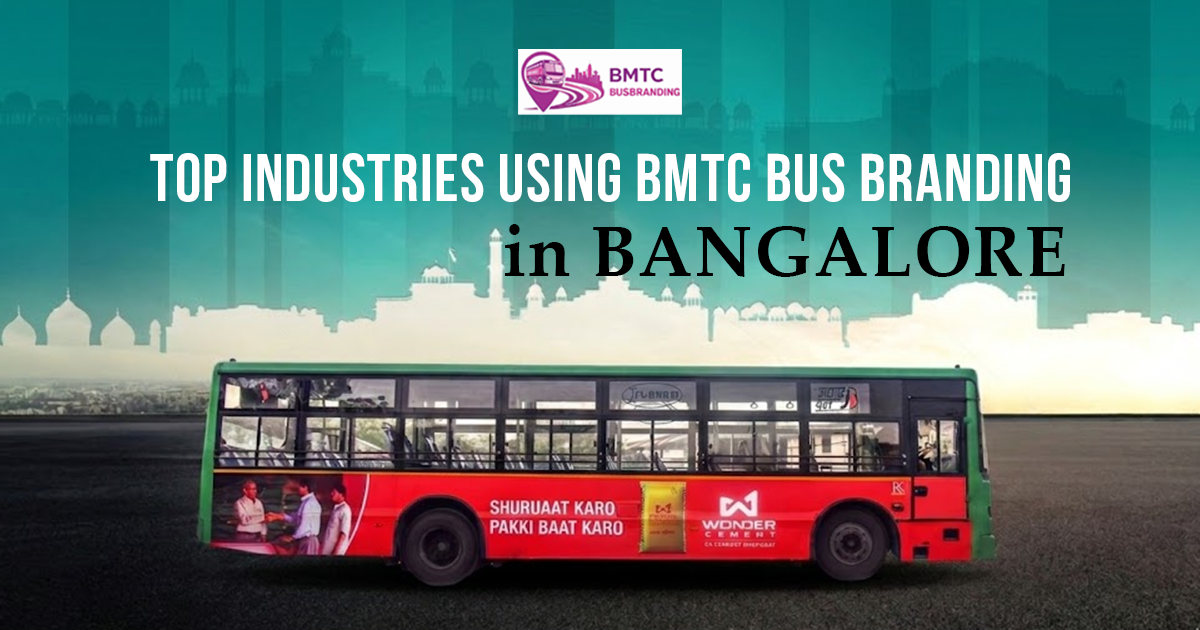
If you’ve spent even a day in Bengaluru traffic, you’ll notice one thing, everything is constantly moving. And right in the middle of it all are BMTC buses, quietly doubling as moving advertisements.
BMTC bus branding works because it answers what most brands actually care about:
- How much does BMTC bus advertising cost?
- Which routes give the best visibility?
- What industries benefit the most?
- Does it actually deliver ROI?
Industries like FMCG, real estate, education, retail, and startups use it because they need consistent, city-wide visibility. A single bus doesn’t stay in one place; it moves through different neighborhoods, showing your brand again and again.
That repeated exposure is what makes the difference. Instead of relying on one fixed billboard, brands stay present across the city without extra effort.
In a fast-moving city like Bangalore, BMTC bus branding isn’t just advertising; it’s visibility that moves with people.
Technology and IT Companies: Targeting Urban Professionals
Bengaluru is India’s tech capital. Thousands of IT professionals commute daily to hubs like Whitefield, Electronic City, HSR Layout and Koramangala. When you put a branded bus on those routes, you are doing route‑targeted advertising that meets your audience where they live and travel.
Why tech brands choose BMTC bus advertising: • High frequency of daily impressions among professionals • Integration with routes that connect workplace clusters • Repeated exposure that strengthens brand recall
A software company promoting enterprise solutions gains far more than visibility, it reinforces top‑of‑mind awareness among decision‑makers who see the same bus every morning and evening.
This type of dynamic out‑of‑home advertising helps transform passive visibility into recall and engagement. A commuter might not click an ad online, but seeing a branded bus repeatedly creates a real‑world connection that digital ads struggle to match.
EdTech and FinTech: Reaching Learners and Young Adults
Bengaluru’s young audience is vast, from students preparing for exams to young professionals managing finances. This makes transit advertising in Bangalore especially valuable for EdTech and FinTech brands.
As buses travel routes near educational zones, co‑working spaces and business districts, they bring ads directly to this high‑potential audience.
Why EdTech and FinTech thrive with bus branding: • Daily commuter touchpoints with students and early career professionals • Repeated brand exposure builds familiarity and trust • Integration with digital campaigns increases overall campaign recall
An online learning platform seen on buses moving from Jayanagar to Whitefield becomes part of a student’s daily routine, strengthening the sense that the brand is relevant, local and present.
Similarly, FinTech companies advertising digital wallets or savings apps reach urban commuters at the moment when they are moving between tasks and are receptive to simple and clear messages.
Want your brand on Bengaluru's buses?
Get a route plan, format recommendation and pricing, usually within a minute.
Real Estate: Visual Storytelling Across Localities
Real estate developers understand something simple: location matters. But it’s not just where the property is, it’s where the audience is.
BMTC bus advertising gives developers a way to make their projects visible across key commuter routes. This is especially effective for properties in high‑growth areas of East and South Bangalore, where daily traffic flows through residential and business districts alike.
Real estate branding benefits include: • Mobility: Buses bring property messaging into neighbourhoods • Local relevance: Ads reach people where they live and work • Complementary visibility alongside digital property listings
Consider a new apartment complex near Sarjapur Road. When buses running through nearby areas carry its branding, potential buyers see it repeatedly during their commute inside and outside the bus. This kind of bus branding builds top‑of‑mind awareness long before a potential buyer visits a sales office.
Retail Chains and FMCG: Bringing Products to Life in Daily Routines
Retail and FMCG brands gain massive benefits from Bangalore commuter advertising because of the sheer volume of daily impressions.
A branded bus is not static, it moves across markets, residential areas, shopping streets and business districts. This constant movement makes it one of the most cost‑effective outdoor advertising strategies available.
Why retail and FMCG succeed with bus branding: • Large scale reach during peak commuting hours • Familiarity built through repeated visibility • Visual storytelling in a context where consumers are already on the move
For example, a snack brand launching a new product gains visibility along routes connecting homes to offices. Every commuter who is hungry in the afternoon or thinking about evening snacks, sees the brand again and again, creating subconscious preference.
A supermarket chain using bus ads strengthens local retail recall by targeting specific neighbourhood routes where its stores are located.
Events, Exhibitions and Political Campaigns: Public Messaging That Moves
Not all success stories in BMTC bus branding are commercial. Events, exhibitions and even political campaigns have started to adopt this mobile billboard advertising approach to reach broad and urban audiences.
Here’s why it works well for public campaigns:
• Buses move across multiple zones during peak visibility hours • Public messaging becomes part of everyday city life • High exposure leads to stronger grassroots awareness
Whether it’s a cultural festival in South Bangalore or an awareness campaign for civic participation, transit advertising helps bring the message into public consciousness without interrupting the commuter experience.
Why These Industries Lead the Way
Now that we’ve seen who is using BMTC bus branding, let’s look at why it works so well as a high‑impact advertising medium.
Massive Repeat Exposure
Bus ads are not like a single billboard you might glance at once. A bus repeats its message every time it crosses a major junction, every time it waits at a stop and every time it passes through a neighbourhood.
This kind of frequency without annoyance builds familiarity.
Strategic Route Targeting
Brands can choose routes that align with their audience needs like IT corridors, educational clusters, residential belts, commercial centres or entertainment zones. This makes bus advertising an efficient route‑based advertising strategy.
Local Relevance and Context
Unlike a billboard that sits in one place, buses move across communities. A message that travels into someone’s daily commute feels familiar, local and trusted.
Complementarity with Digital and OOH
Bus branding works beautifully with online campaigns. A commuter who has seen a brand on a bus and then sees it online experiences reinforced brand recall, making other marketing channels more effective.
Transparent Monitoring and Reporting
With modern campaign monitoring, advertisers get proof‑of‑posting and insights into route effectiveness, helping them evaluate and optimise campaigns over time.
Real Numbers That Bring It Into Perspective
The momentum behind BMTC bus advertising is not just fact based, it’s backed by real figures:
- BMTC earned over ₹25 crore from bus advertising in 2024–25, showing strong demand from advertisers for this medium.
- Nearly 6,200 buses were used for bus branding campaigns, giving brands a sweeping presence across the city.
- BMTC ridership saw notable increases, with average riders per bus growing, reinforcing the high visibility potential of transit ads.
- Buses run long hours daily often functioning 15+ hours across routes giving extended exposure that many other media cannot match.
These figures show that both public transport planners and advertisers view bus branding as a key part of Bangalore’s outdoor advertising ecosystem.Top 5 FAQs on BMTC Bus Branding in Bangalore
1. What is BMTC bus branding?
BMTC bus branding is a form of transit advertising where buses are used as moving billboards to promote brands across Bangalore’s high-traffic routes.
2. Which industries benefit most from BMTC bus advertising?
Industries like technology, EdTech, FinTech, real estate, retail, FMCG, events, and political campaigns benefit the most due to their need for large-scale urban visibility.
3. Why is BMTC bus branding effective?
It provides repeated exposure, route-based targeting, and citywide reach, making it highly effective for building brand recall among daily commuters.
4. How does bus branding compare to digital advertising?
Unlike digital ads, bus branding creates real-world visibility and repeated impressions without relying on clicks, making it more memorable and less intrusive.
5. Is BMTC bus advertising worth it for brands?
Yes, with thousands of buses, long daily operating hours, and high commuter traffic, it offers strong ROI through continuous visibility and mass reach.
The best industries using BMTC bus branding in Bangalore are those that understand one simple truth: ‘People are always on the move and so should your message be.’
From technology and EdTech to retail, real estate and public campaigns, brands are learning that visibility without interruption builds trust, recall and real engagement. This form of outdoor advertising does more than reach eyes and it becomes part of everyday experiences.
In a city where life unfolds on its roads and streets, BMTC buses offer one of the most powerful ways to connect with Bangalore’s urban audiences. For brands that want strategic reach, mobility and frequency, bus branding is no longer just an option and it’s a smart, measurable and effective way to be seen where it matters most.
Bus Branding Glossary
- Full bus branding (wrap)
- A full vehicle wrap covering both sides and the rear of the bus, the highest-impact, most visible format.
- Bus back / rear branding
- Advertising on the rear panel of the bus, in the line of sight of traffic queued behind it at signals and junctions.
- Side panel branding
- Branding on one or both side panels of the bus body, facing pedestrians and parallel traffic along the route.
- Vajra / AC service
- BMTC's premium air-conditioned (Volvo / Vayu Vajra) services, carrying a higher-income commuter set on IT and airport corridors.
- TTMC
- Traffic and Transit Management Centre, a large BMTC bus terminal where many routes start, terminate and interchange.
- Depot
- The BMTC facility where buses are parked, serviced and from which many local routes originate.
- Dwell time
- How long a bus stays in view of a stationary crowd, at a stop, signal or in slow traffic, which lengthens brand exposure.
- Corridor
- A main arterial road (e.g. the Outer Ring Road or Hosur Road) that a bus route runs along, defining who sees the branding.
How to run a BMTC bus branding campaign
Five simple steps from enquiry to a live, tracked campaign on Bengaluru's buses.
- 1
Pick your area & audience
Tell us the Bengaluru area or corridor you want to reach and who you're targeting, IT professionals, shoppers, students or residents.
- 2
Choose a format
Select a format, full bus wrap, rear panel, side panel or premium AC/Vajra service, based on your budget and the impact you want.
- 3
Select routes & bus count
We map the high-frequency routes and stops that cover your audience and recommend how many buses to brand.
- 4
Approve the creative
Share your artwork (or we help design it). We prepare it to BMTC specifications and get the approvals.
- 5
Go live & get proof
We print, wrap and deploy the buses, then share proof of display so you can see your brand on the road.
Bus Branding Formats
Choose how your brand rides, pick the format that fits your goal and budget.
Bus Branding Across Bengaluru
We run BMTC bus branding in every major Bengaluru neighbourhood. Explore more areas:
Outdoor & Transit Advertising Specialists · Bengaluru
We plan, design and run BMTC bus branding campaigns across every major Bengaluru corridor, matching brands to the routes, formats and audiences that deliver the most visibility.
Discover More
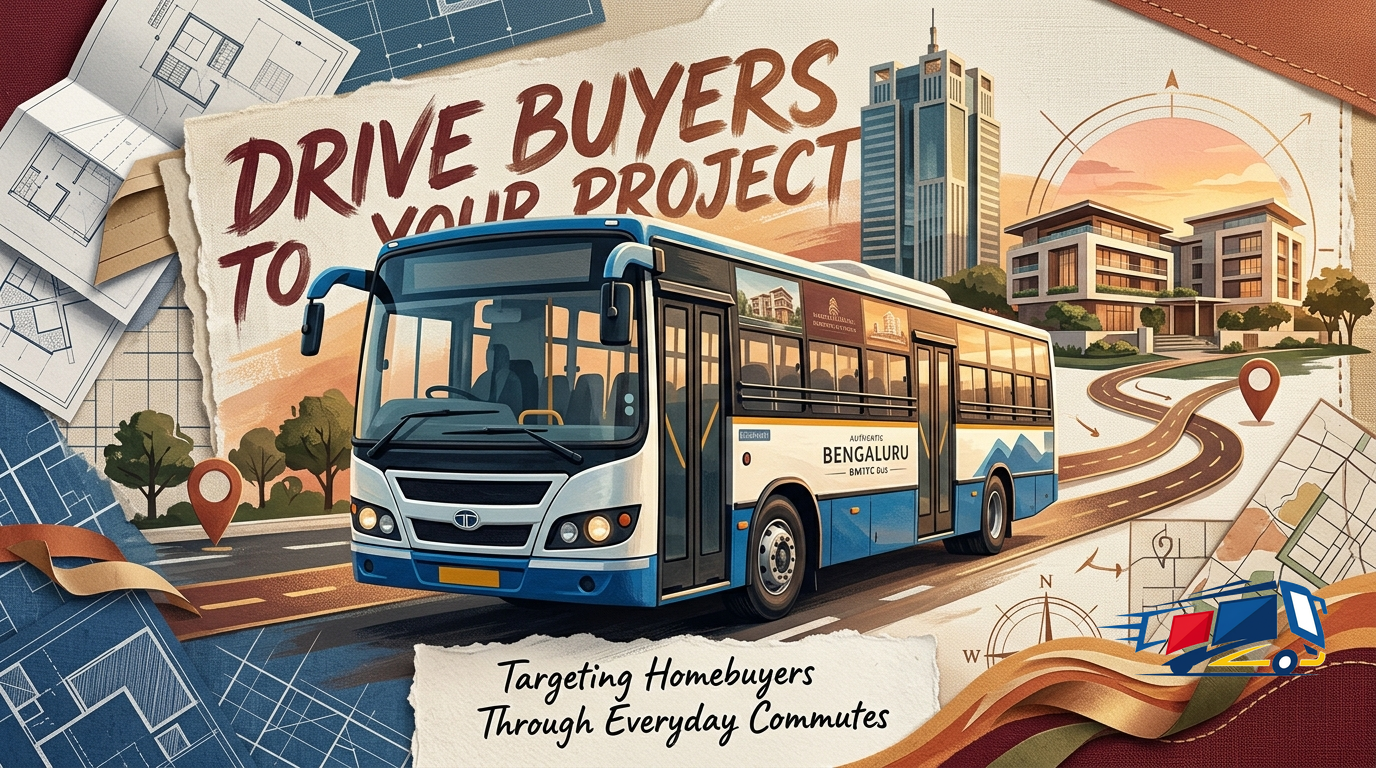
Bus Branding for Real Estate Developers
How bus branding drives site visits to a property launch: route targeting around the project and its feeder corridors, the formats that suit a real estate campaign, and where transit fits a launch media mix.
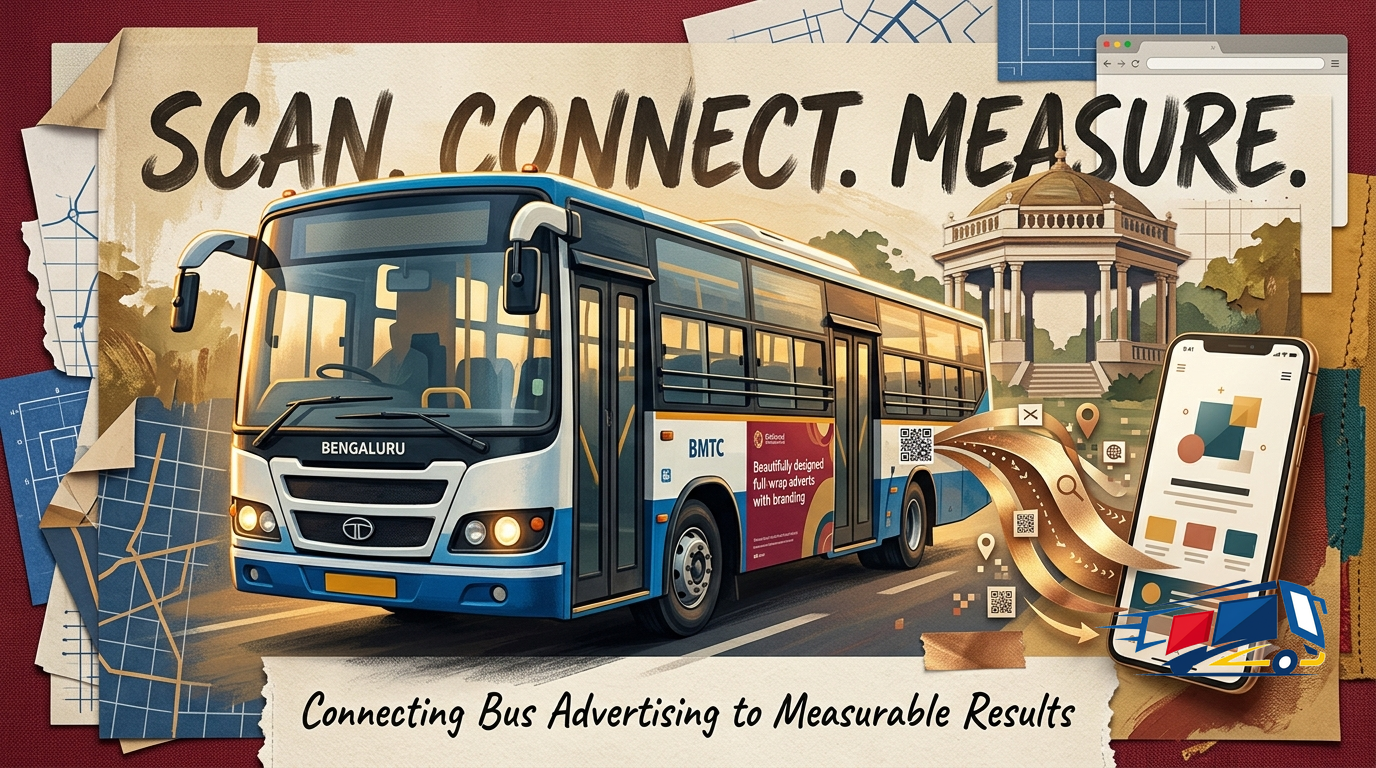
Using QR Codes & Landing Pages to Track Bus Campaigns
A practical how-to for tracking bus campaigns with QR codes and landing pages: dynamic QR with a clear CTA, scannable placement, a UTM-tagged landing page, and reading the data honestly.
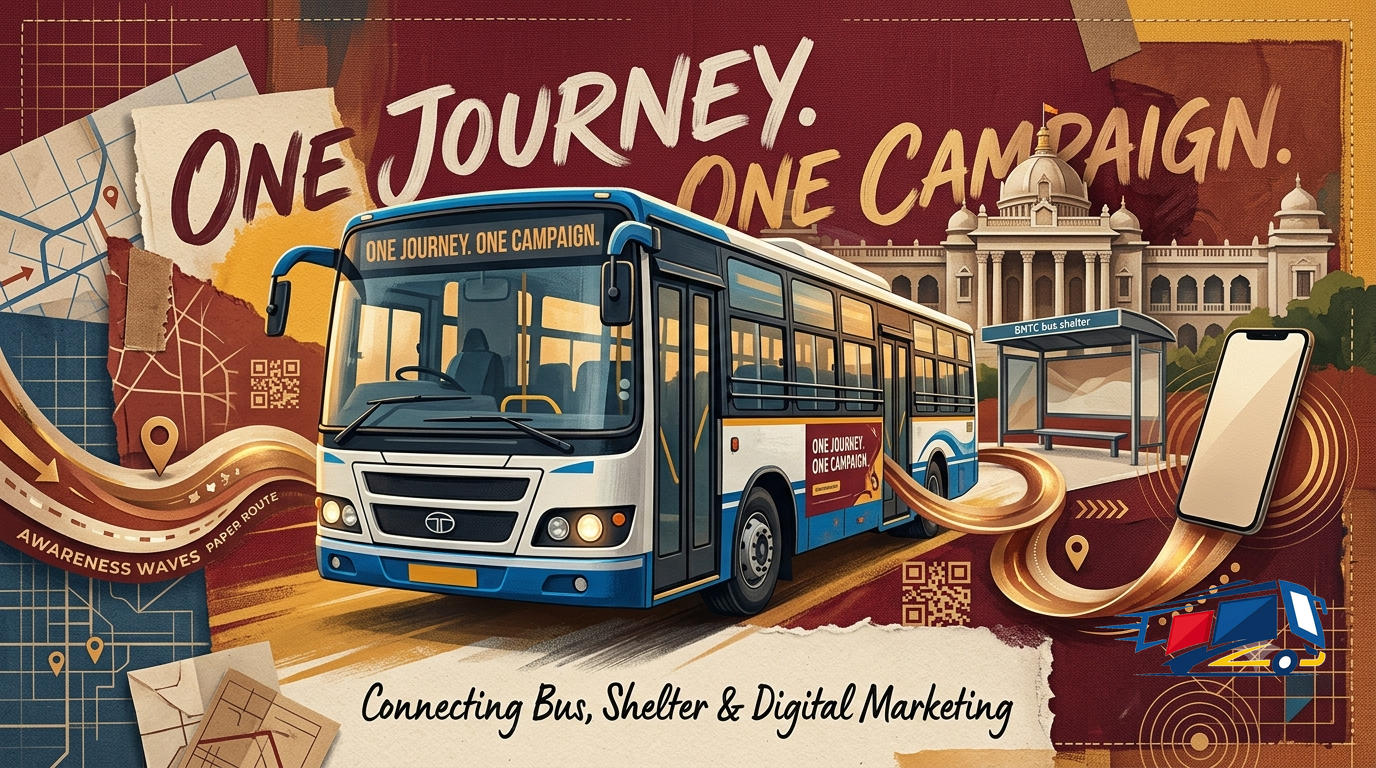
Combining Bus, Shelter & Digital for a Full-Funnel Campaign
Bus, bus shelter and digital each do a different funnel job: the bus builds awareness on the move, the shelter holds a captive audience at the decision point, digital converts. How to stack them into one plan.