Setting Campaign Objectives Before You Advertise
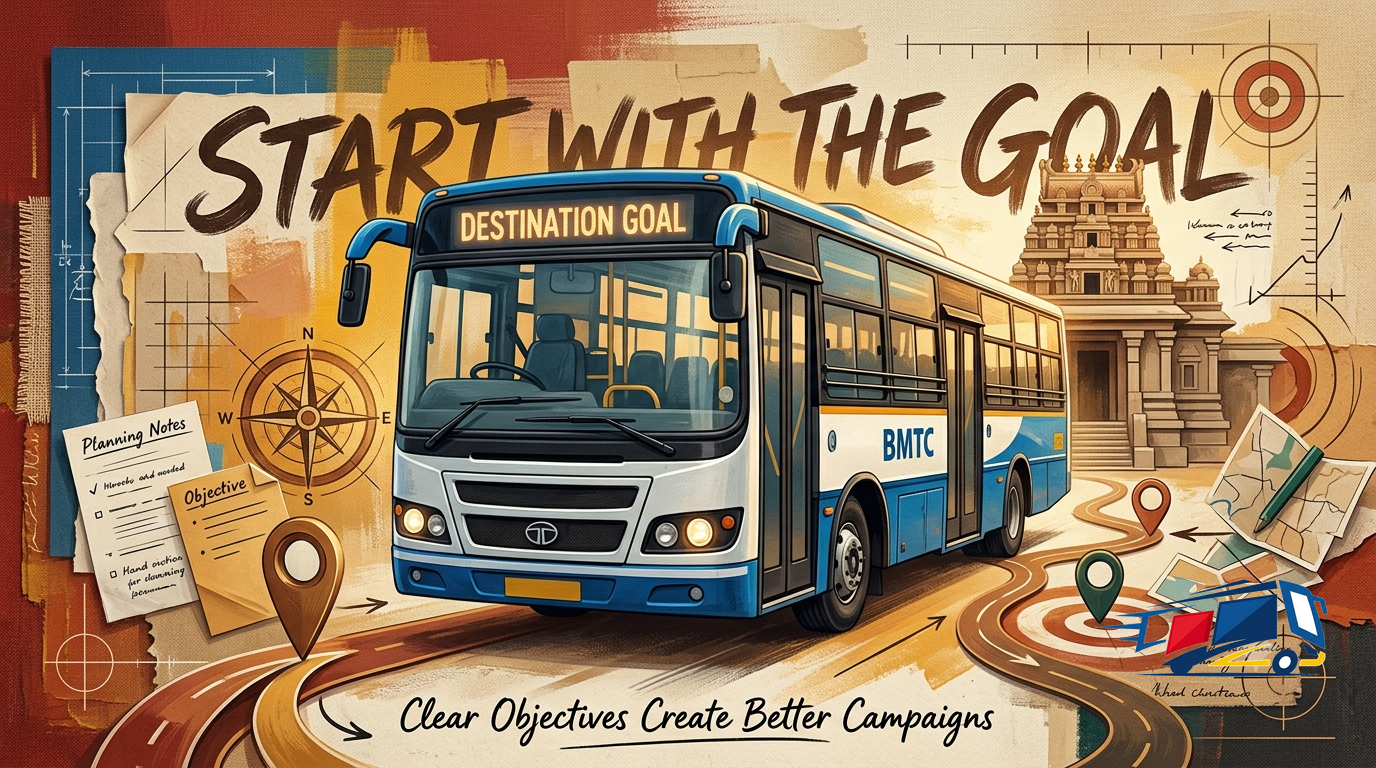
The most expensive mistake in advertising is starting without a clear objective. A campaign with no single goal cannot be aimed, judged or improved, it just spends. Decide what this campaign must do, write it down in measurable terms, and every choice after that gets easier. Set the objective first, and the brief almost writes itself.
Key takeaways
- Objective first, everything else after. Audience, format, budget and KPI all flow from the goal you set.
- Three buckets: awareness (be known), consideration (be weighed up), response (be acted on).
- Each needs a different KPI. Recall for awareness, search and enquiries for consideration, codes and sales for response.
- Make it SMART: specific, measurable, achievable, relevant, time-bound, so "raise awareness" becomes a number and a date.
- Pick one primary objective. A campaign aimed at everything hits nothing cleanly, and cannot be judged.
Why the objective comes first
An objective is not paperwork, it is the instruction that aims the whole campaign. It decides who you target, what the creative says, which buses and routes you pick, and how you will know it worked. Skip it, and you are buying media on a hunch.
The three objective buckets
Almost every campaign goal fits one of three stages of how people move toward a brand: getting known, getting considered, getting a response. Naming which one you are in is the single most clarifying decision you can make.
| Bucket | The goal | For a brand that is |
|---|---|---|
| Awareness | Be known to exist | New, or entering an area |
| Consideration | Be weighed up and remembered | Known but not yet preferred |
| Response | Be acted on now | Driving a visit, call or sale |
These are a sequence, not a menu. A brand nobody knows cannot jump to a response goal and expect results, awareness has to come first. Knowing which stage you are really in stops you from setting a goal the audience is not ready for.
Want your brand on Bengaluru's buses?
Get a route plan, format recommendation and pricing, usually within a minute.
Match the objective to the campaign
Once the bucket is clear, the campaign shape follows. Each objective wants a different message, a different format and a different route strategy. This is where setting the goal first pays off, the plan stops being arbitrary.
| Objective | Message | Leans toward |
|---|---|---|
| Awareness | Name, simple, bold | Wide route spread, high reach |
| Consideration | A reason to prefer you | Repeated, on key corridors |
| Response | A clear call to act | Concentrated, with a hook |
Most weak campaigns are not badly made, they are badly aimed. The creative is fine, the buses are fine, but nobody decided what the campaign was for. Set the objective and the same money works far harder.
The KPI that matches each objective
Here is the part people skip: a KPI you choose after the campaign is just a number you found, not a goal you hit. Decide the measure up front, and pick the one that actually reflects your objective rather than the one that is easiest to count.
| Objective | What to track | Avoid judging by |
|---|---|---|
| Awareness | Recall lift, branded search, reach | Immediate sales |
| Consideration | Site visits, enquiries, search lift | Raw impressions |
| Response | Code use, calls, footfall, sales | Awareness alone |
Make the objective SMART
A goal you cannot measure is a wish. The SMART test turns a vague aim into a usable objective: specific, measurable, achievable, relevant, time-bound. Run any objective through it before you brief a single bus.
- Specific. One clear aim, not "do better". Name the exact change you want.
- Measurable. Attach a number, a percentage lift, a count of enquiries, a footfall change.
- Achievable. Realistic for the budget and the area, ambition without fantasy.
- Relevant. It must ladder up to a real business goal, not a number for its own sake.
- Time-bound. A deadline, so you know when to judge it.
We will pin the objective before we plan a thing
Before recommending a single bus, we will help you name the one objective that matters, place it in the right bucket, write it SMART, and pick the KPI that proves it. That one step is what separates a campaign you can judge from a campaign you just hope worked. Tell us what you are trying to achieve, in plain words, and we will turn it into a measurable objective and a plan built to hit it.
Set your objective and plan under bus branding in Bengaluru, or see the full approach in transit advertising.
Frequently Asked Questions
Why set an objective before advertising?+
Because it aims everything: audience, message, format, routes and how you will measure success. Without one, a campaign just spends money and cannot be judged or improved.
What are the main types of campaign objective?+
Three buckets: awareness (get known), consideration (get weighed up and remembered), and response (get a visit, call or sale). They are a sequence, not a pick-and-mix.
How do I know which objective to choose?+
By where your brand stands. New or unknown needs awareness; known but not preferred needs consideration; ready to convert needs response. Pick the one that matches reality.
What KPI should I track?+
The one that fits the objective: recall and branded search for awareness, enquiries and site visits for consideration, codes, calls and sales for response. Avoid judging by vanity metrics like raw impressions.
What makes an objective SMART?+
Specific, Measurable, Achievable, Relevant, Time-bound. It turns "raise awareness" into something like "lift recall in this area from 15% to 25% in three months", a goal you can actually test.
Can a campaign have more than one objective?+
It can have secondary goals, but pick one primary objective. A campaign optimised for everything at once is optimised for nothing, and becomes impossible to judge cleanly.
Bus Branding Glossary
- Full bus branding (wrap)
- A full vehicle wrap covering both sides and the rear of the bus, the highest-impact, most visible format.
- Bus back / rear branding
- Advertising on the rear panel of the bus, in the line of sight of traffic queued behind it at signals and junctions.
- Side panel branding
- Branding on one or both side panels of the bus body, facing pedestrians and parallel traffic along the route.
- Vajra / AC service
- BMTC's premium air-conditioned (Volvo / Vayu Vajra) services, carrying a higher-income commuter set on IT and airport corridors.
- TTMC
- Traffic and Transit Management Centre, a large BMTC bus terminal where many routes start, terminate and interchange.
- Depot
- The BMTC facility where buses are parked, serviced and from which many local routes originate.
- Dwell time
- How long a bus stays in view of a stationary crowd, at a stop, signal or in slow traffic, which lengthens brand exposure.
- Corridor
- A main arterial road (e.g. the Outer Ring Road or Hosur Road) that a bus route runs along, defining who sees the branding.
How to run a BMTC bus branding campaign
Five simple steps from enquiry to a live, tracked campaign on Bengaluru's buses.
- 1
Pick your area & audience
Tell us the Bengaluru area or corridor you want to reach and who you're targeting, IT professionals, shoppers, students or residents.
- 2
Choose a format
Select a format, full bus wrap, rear panel, side panel or premium AC/Vajra service, based on your budget and the impact you want.
- 3
Select routes & bus count
We map the high-frequency routes and stops that cover your audience and recommend how many buses to brand.
- 4
Approve the creative
Share your artwork (or we help design it). We prepare it to BMTC specifications and get the approvals.
- 5
Go live & get proof
We print, wrap and deploy the buses, then share proof of display so you can see your brand on the road.
Bus Branding Formats
Choose how your brand rides, pick the format that fits your goal and budget.
Bus Branding Across Bengaluru
We run BMTC bus branding in every major Bengaluru neighbourhood. Explore more areas:
Outdoor & Transit Advertising Specialists
We plan, design and run BMTC bus branding campaigns across every major Bengaluru corridor, matching brands to the routes, formats and audiences that deliver the most visibility.
Discover More
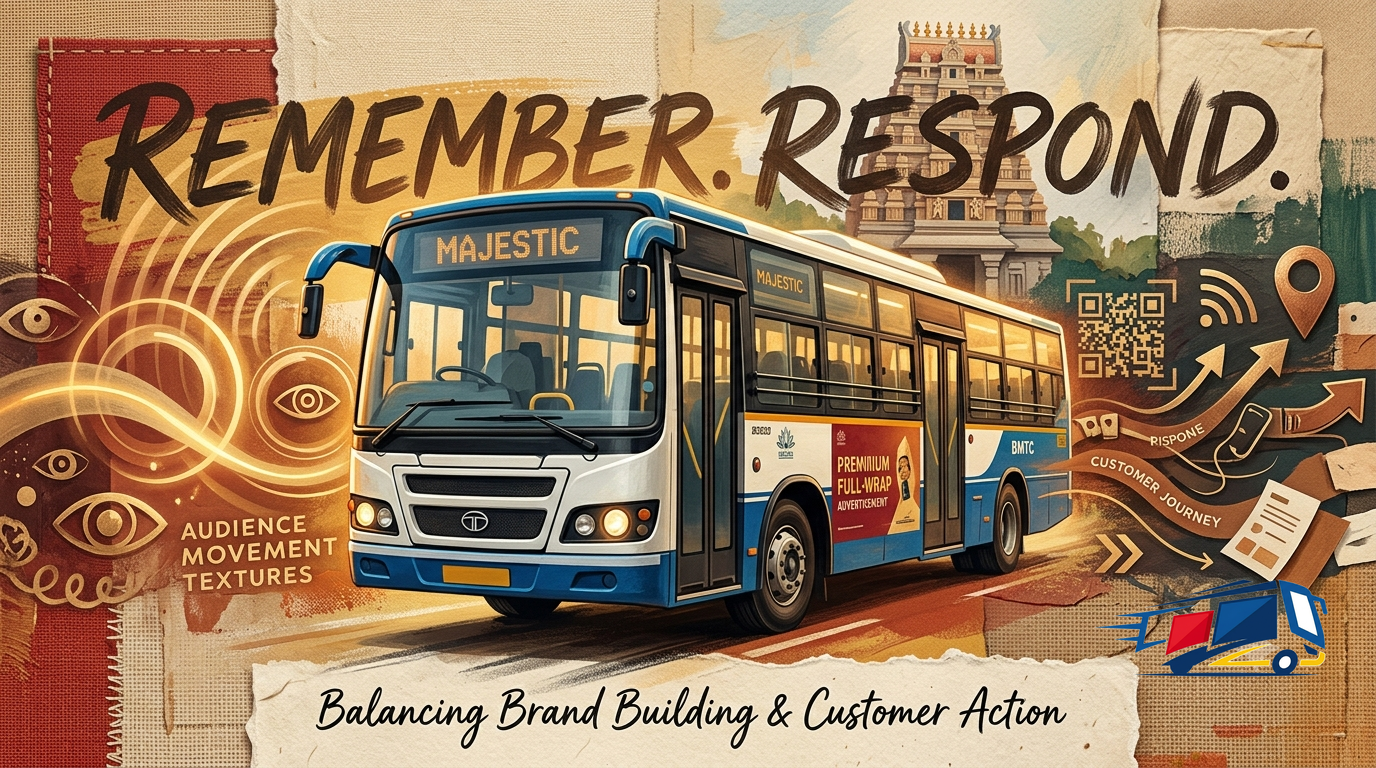
Brand Awareness vs Response Campaigns on Buses
What bus branding does best: awareness or direct response? A comparison of the two campaign types on buses, why a moving vehicle favours brand-building, and how to blend both.
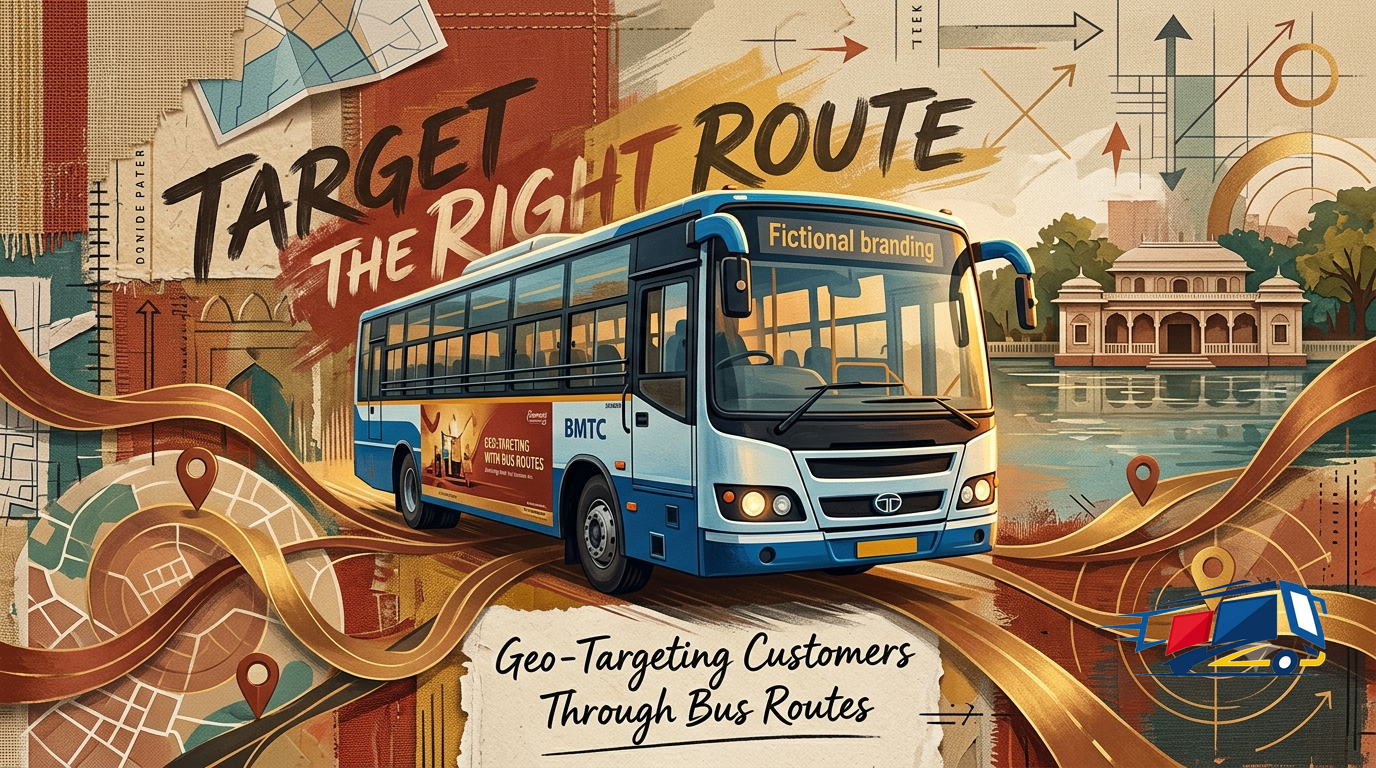
Geo-Targeting With Bus Routes: Advertising Where Your Customers Are
A bus route is a geo-targeting tool you can drive. How to map your customers to the routes they use, think in catchments instead of points, and stack corridors to cover a neighbourhood or a whole city.
How to Build an OOH Media Plan for Bengaluru
A step-by-step framework to build an out-of-home media plan for Bengaluru: set objectives, define the audience, choose corridors and routes, pick formats, split the budget, and build in measurement.