The BMTC Advertising Approval & Permissions Process
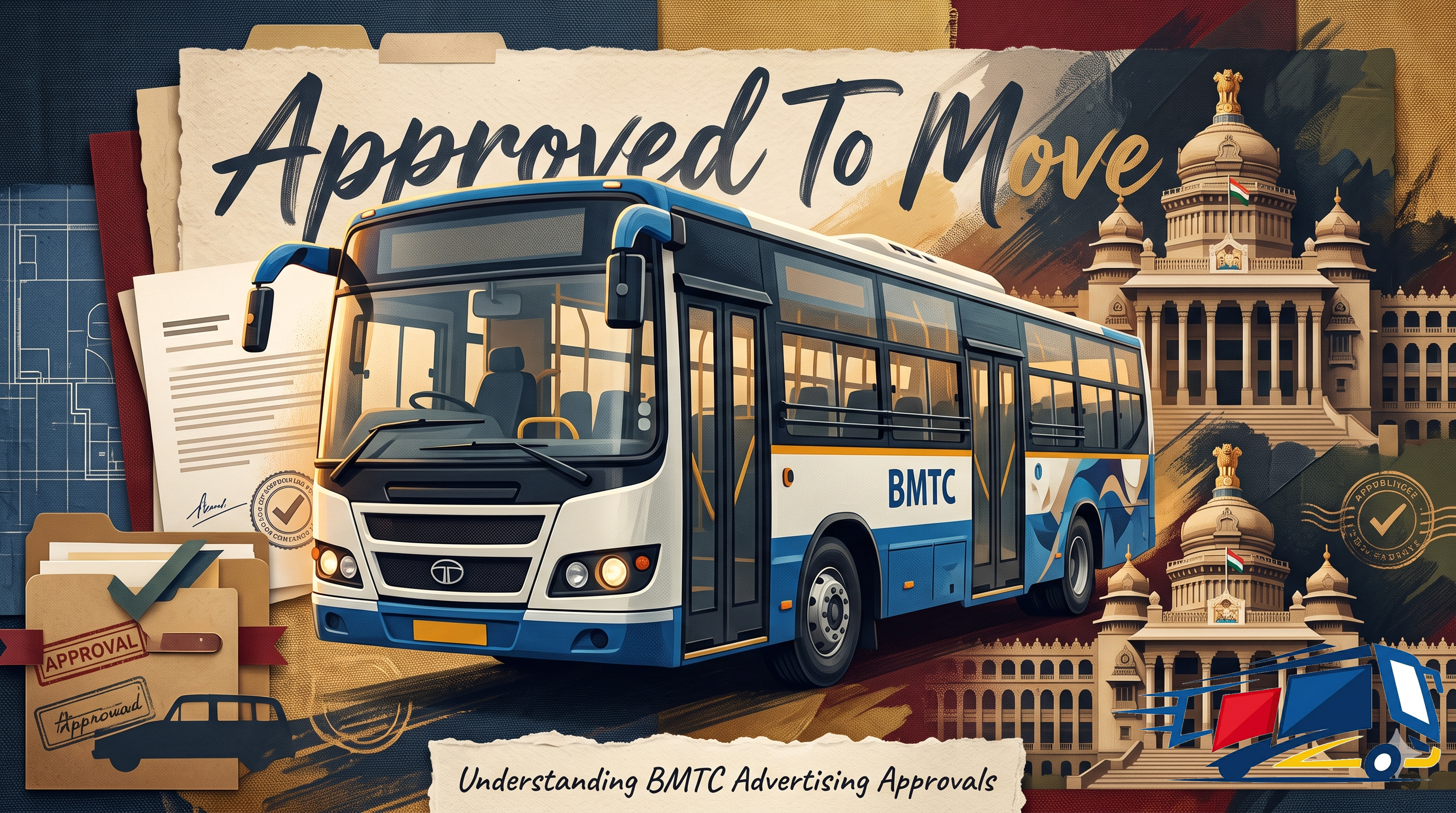
A branded bus on a public road is not a free-for-all. It sits under two approvals: the transport corporation's consent as the vehicle owner, and the civic advertisement clearance and tax. Get either wrong and a campaign can be stopped. Done properly, it runs clean. Here is how the approval process actually works.
Key takeaways
- BMTC bus advertising needs two approvals, not one: owner consent and civic clearance.
- BMTC consents as the vehicle owner, typically through an empanelled agency.
- The civic body handles the advertisement tax and content or placement rules.
- Approvals reference the vehicle list, registration numbers and display period.
- A capable agency absorbs the paperwork, so your campaign is compliant from day one.
Why approval exists at all
A bus is public infrastructure on a public road, so advertising on it touches two interests: the corporation that owns the vehicle, and the civic body that regulates and taxes outdoor advertising in the city.
| Interest | Concern |
|---|---|
| Vehicle owner | Consent to use its buses for ads |
| Civic body | Advertisement tax and city rules |
This is why a quiet, off-the-books arrangement is a risk. An advertisement that skips either approval can be flagged and pulled, taking your campaign and spend with it. The approvals are what make it legitimate.
The two layers of permission
Think of it as owner plus city. First BMTC consents to its buses carrying your branding, then the civic advertisement clearance and tax are settled. Both reference the same campaign details.
Want your brand on Bengaluru's buses?
Get a route plan, format recommendation and pricing, usually within a minute.
Who grants what
Each layer has a clear owner. BMTC controls consent for its fleet; the civic body controls the advertisement tax and the rules on what may be displayed and where.
| Approval | Granted by | Covers |
|---|---|---|
| Owner consent | BMTC | Use of its buses, vehicle list, period |
| Civic clearance | City advertisement dept | Ad tax, content and placement rules |
| Day-to-day route | BMTC operations | Which buses run where |
The practical point is that no single counter hands you everything. The approvals come from different desks, which is exactly why most brands route the whole thing through one agency that knows both.
What compliance actually involves
Beyond consent and tax, the branding itself must follow rules: it cannot obstruct the bus's safe operation, and the content must stay within what the authorities permit.
Compliance is not red tape for its own sake. A wrap that blocks a window or a panel that ignores content rules is exactly what gets a campaign pulled, so getting it right up front is what keeps the buses on the road for your full booking.
How the timeline works
Approvals run alongside production, not in a queue after it. While artwork is finalised and printed, the consent and clearance are arranged, so the two meet at the installation date.
| Track | What happens |
|---|---|
| Approval track | Consent, clearance, tax settled |
| Production track | Artwork, print, prep |
| They meet at | Installation, then live |
The honest planning tip is to leave room for the approval track. It is usually smooth when handled by people who do it often, but it is the part least within your control, so a buffer protects your launch date.
How an agency removes the friction
The reason brands rarely touch this directly is that an established agency already runs the approval path. It assembles the vehicle list, secures consent, settles the civic side and keeps the campaign compliant throughout.
- Prepares the vehicle list. Buses, registration numbers and the display period in one place.
- Secures owner consent. Arranges BMTC's go-ahead to brand the agreed fleet.
- Settles the civic side. Handles the advertisement clearance and tax.
- Checks the artwork. Confirms the design meets safety and content rules.
- Keeps records. Holds the approvals so the campaign is provably legitimate.
Source: standard agency handling of transit approvals, 2026. Scope varies by agency; confirm what is included.
Your campaign, compliant from day one
You should never have to learn the approval map yourself. We handle both layers: the consent to brand the buses and the civic clearance and tax, and we keep the artwork within the safety and content rules so nothing gets flagged once you are live. You get a campaign that is official, on the road for its full term, and backed by records that prove it.
See how we run campaigns under bus branding in Bengaluru, or read the wider picture in transit advertising.
Frequently Asked Questions
What approvals does BMTC bus advertising need?+
Two: BMTC's consent as the vehicle owner, and the civic advertisement clearance and tax. Both are needed for a campaign to run legitimately.
Who grants permission to advertise on BMTC buses?+
BMTC consents to using its fleet, usually through an empanelled agency, while the city advertisement department handles the tax and the content and placement rules.
What information do the approvals need?+
The list of buses, their registration numbers and the display period. Both layers work off these same details, so keeping them consistent matters.
What are the compliance rules?+
The branding must not block windows or lights or compromise safe operation, the content must stay within civic rules, and the advertisement tax must be settled.
How long do approvals take?+
They run parallel to production rather than after it, meeting at installation. Lead times vary, so it is wise to build a buffer before a fixed launch date.
Do I have to handle any of this myself?+
No. An established agency carries the whole approval path, the vehicle list, consent, civic clearance, tax and compliance, so your campaign is compliant from day one.
Bus Branding Glossary
- Full bus branding (wrap)
- A full vehicle wrap covering both sides and the rear of the bus, the highest-impact, most visible format.
- Bus back / rear branding
- Advertising on the rear panel of the bus, in the line of sight of traffic queued behind it at signals and junctions.
- Side panel branding
- Branding on one or both side panels of the bus body, facing pedestrians and parallel traffic along the route.
- Vajra / AC service
- BMTC's premium air-conditioned (Volvo / Vayu Vajra) services, carrying a higher-income commuter set on IT and airport corridors.
- TTMC
- Traffic and Transit Management Centre, a large BMTC bus terminal where many routes start, terminate and interchange.
- Depot
- The BMTC facility where buses are parked, serviced and from which many local routes originate.
- Dwell time
- How long a bus stays in view of a stationary crowd, at a stop, signal or in slow traffic, which lengthens brand exposure.
- Corridor
- A main arterial road (e.g. the Outer Ring Road or Hosur Road) that a bus route runs along, defining who sees the branding.
How to run a BMTC bus branding campaign
Five simple steps from enquiry to a live, tracked campaign on Bengaluru's buses.
- 1
Pick your area & audience
Tell us the Bengaluru area or corridor you want to reach and who you're targeting, IT professionals, shoppers, students or residents.
- 2
Choose a format
Select a format, full bus wrap, rear panel, side panel or premium AC/Vajra service, based on your budget and the impact you want.
- 3
Select routes & bus count
We map the high-frequency routes and stops that cover your audience and recommend how many buses to brand.
- 4
Approve the creative
Share your artwork (or we help design it). We prepare it to BMTC specifications and get the approvals.
- 5
Go live & get proof
We print, wrap and deploy the buses, then share proof of display so you can see your brand on the road.
Bus Branding Formats
Choose how your brand rides, pick the format that fits your goal and budget.
Bus Branding Across Bengaluru
We run BMTC bus branding in every major Bengaluru neighbourhood. Explore more areas:
Outdoor & Transit Advertising Specialists
We plan, design and run BMTC bus branding campaigns across every major Bengaluru corridor, matching brands to the routes, formats and audiences that deliver the most visibility.
Discover More
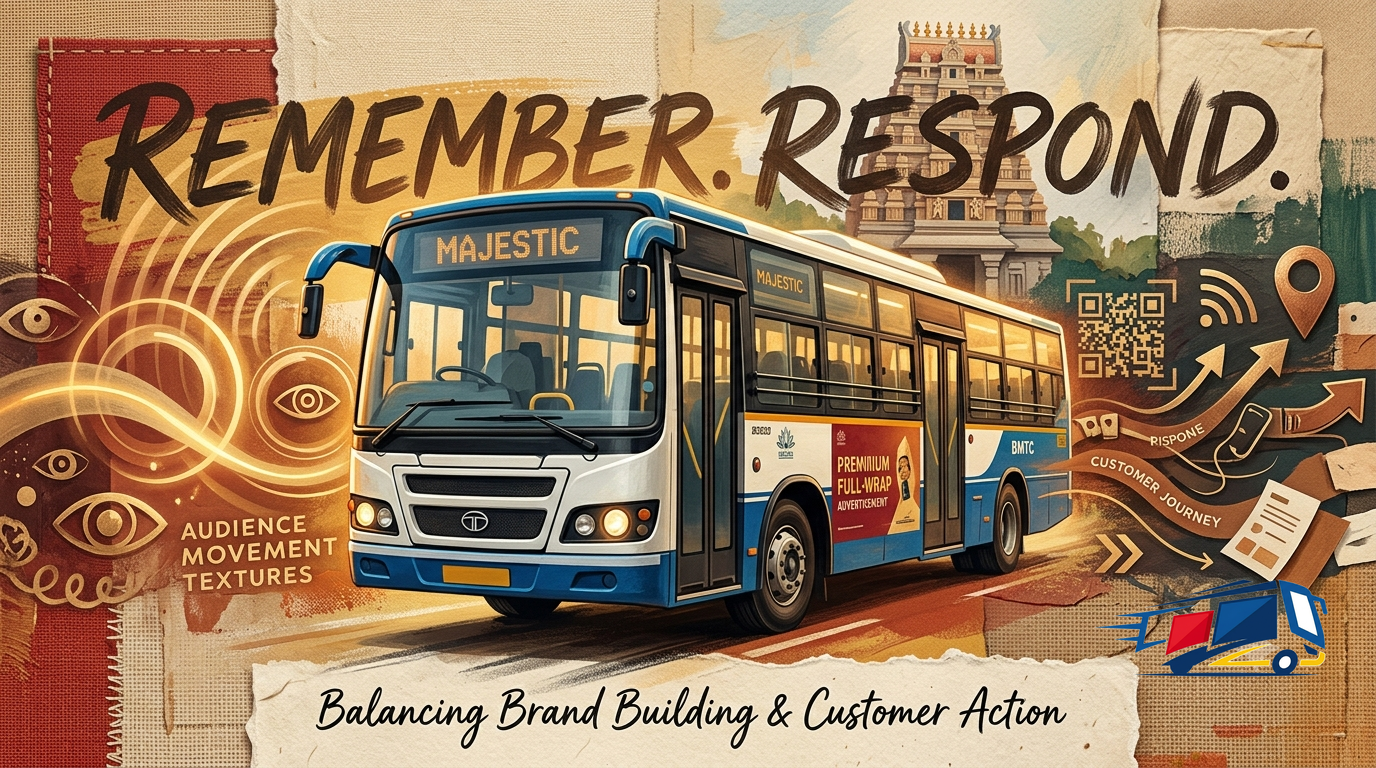
Brand Awareness vs Response Campaigns on Buses
What bus branding does best: awareness or direct response? A comparison of the two campaign types on buses, why a moving vehicle favours brand-building, and how to blend both.
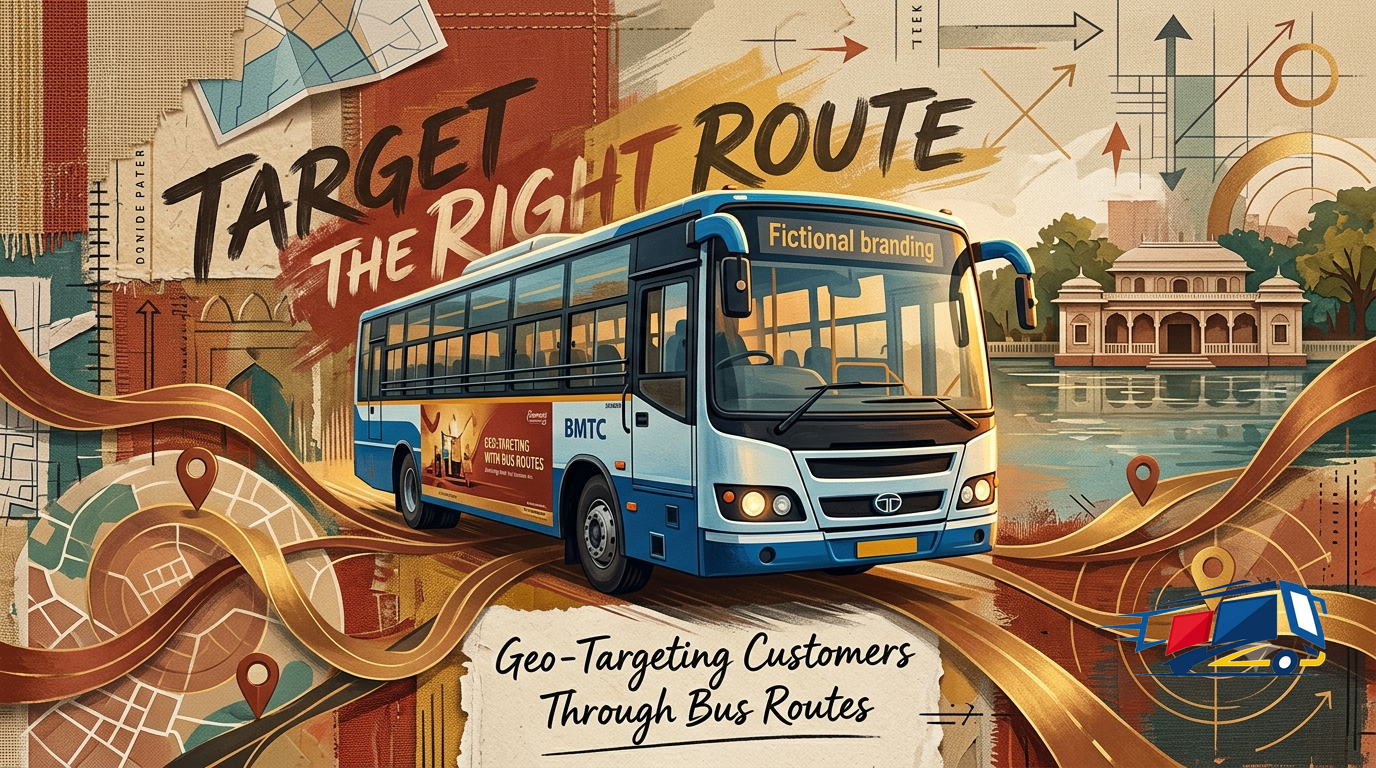
Geo-Targeting With Bus Routes: Advertising Where Your Customers Are
A bus route is a geo-targeting tool you can drive. How to map your customers to the routes they use, think in catchments instead of points, and stack corridors to cover a neighbourhood or a whole city.
Setting Campaign Objectives Before You Advertise
Why setting one clear objective before you advertise decides everything: awareness vs consideration vs response, how each maps to a different message, format and KPI, and how to write a SMART objective.