BMTC by the Numbers: Fleet Size, Depots & Daily Ridership
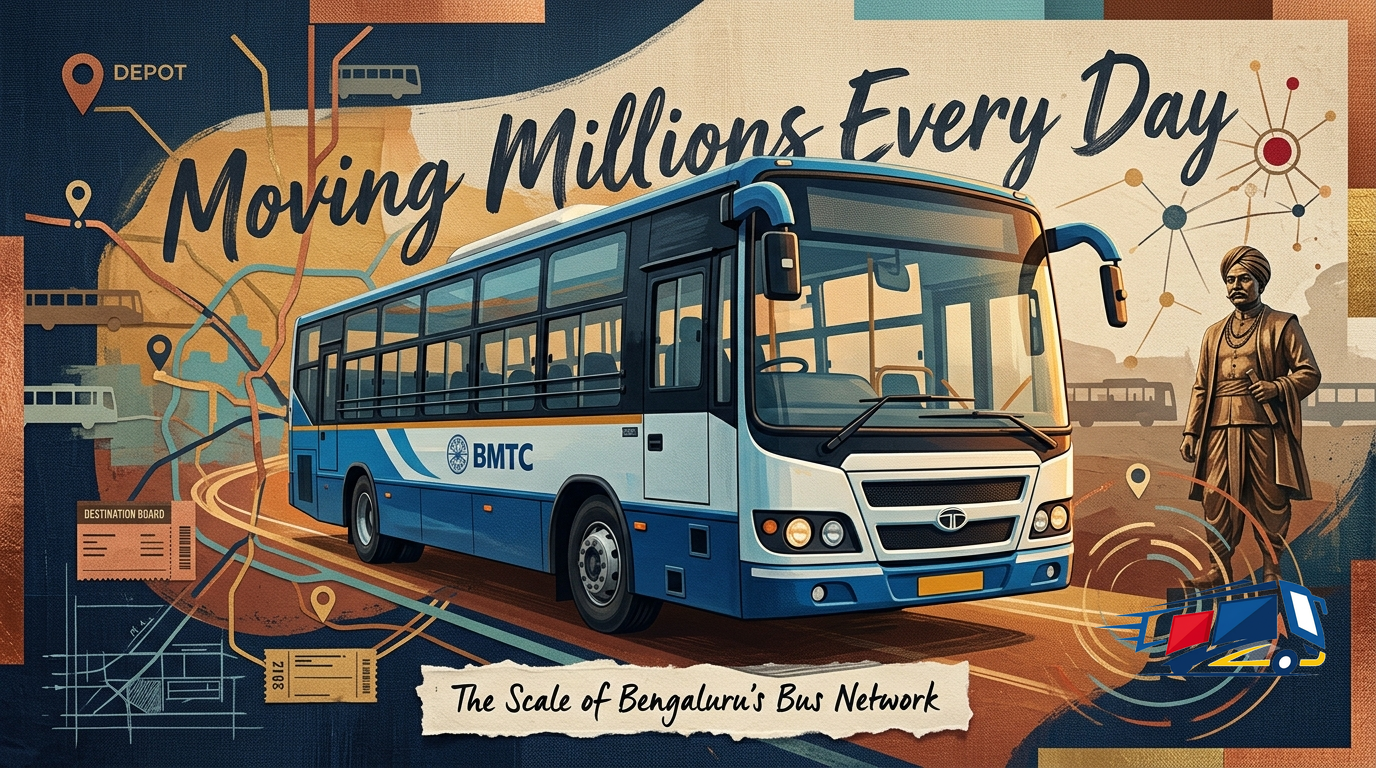
The scale of BMTC in one place. It runs about 7,000 buses from roughly 50 depots, covers close to 11.9 lakh km a day and carries more than 30 lakh riders. Every figure below is dated and sourced.
If you want the hard numbers on BMTC without wading through history, this is the page. BMTC is the sole city bus operator for Bengaluru, and its scale is the reason it carries the bulk of the city's public transport load. The single figure to remember: more than 30 lakh rides every single day.
| Key fact | Detail |
|---|---|
| Fleet | ~7,000 buses, ~1,700 electric |
| Depots | About 50 |
| Daily ridership | 30 lakh+ (recent 35 to 48 lakh) |
| Distance | ~11.9 lakh km a day |
| Trips | 61,000+ a day |
The headline stats in one table
One snapshot of BMTC's size, with the date each figure refers to.
Bus networks are moving targets, so dates matter. The table below pulls the core operating numbers together; treat each as accurate for the period noted rather than fixed forever.
| Metric | Figure | As of |
|---|---|---|
| Total fleet | ~7,000 buses | late 2025 |
| Electric buses | ~1,700 | early 2026 |
| Depots | ~50 | 2025 |
| Major bus stations | 3 | 2025 |
| Minor bus stations | ~35 | 2025 |
| TTMCs | 12 | 2025 |
| Schedules per day | 6,200+ | 2025 |
| Trips per day | 61,000+ | 2025 |
| Distance per day | ~11.9 lakh km | 2025 |
| Daily ridership | 30 lakh+ | 2025-26 |
| Daily fare revenue | Rs 7 crore+ | 2025 |
| Workforce | 30,000+ | recent |
Fleet and depots
Around 7,000 buses operated from about 50 depots across the city.
For years the fleet hovered near 6,500 buses, but the electric push has nudged it past 7,000, with roughly 1,700 e-buses now in the mix. Depots have grown too; an official audit counted 46 in 2022, and the figure is closer to 50 today.
Want your brand on Bengaluru's buses?
Get a route plan, format recommendation and pricing, usually within a minute.
Daily ridership over time
More than 30 lakh rides a day, down from a 2017 peak and climbing again after Shakti.
Ridership is the most quoted and most variable BMTC number. It fell through the late 2010s, dropped hard in the pandemic, then rebounded once the Shakti scheme made travel free for women on ordinary buses. Different sources put the current figure anywhere from 35 to 48 lakh, so the safe, reliable floor is 30 lakh plus.
| Period | Daily ridership |
|---|---|
| 2017-18 | ~44 lakh |
| 2019-20 | ~33 lakh |
| Pandemic low (2020-22) | ~20 to 27 lakh |
| Post-Shakti (2023 on) | 30 lakh+ |
| Recent estimates (2025-26) | ~35 to 48 lakh |
Distance, trips and reach
About 11.9 lakh km and over 61,000 trips a day, spread across the metro region.
Beyond the bus count, it is the daily mileage that shows true reach. BMTC buses cover close to 11.9 lakh km a day on more than 61,000 trips, threading through nearly every corridor in a service area that extends well past the core city.
When people ask why bus advertising works in Bengaluru, the answer is simply the size of these numbers. A medium that touches 30 lakh people a day does not need much more justification than that.
What this scale means for advertisers
Every figure above translates into reach a brand can buy.
Numbers like these are exactly why transit advertising earns a place in a media plan. A fleet this large, covering this much ground, in front of this many people, is hard to match for citywide reach at the cost. The table connects each stat to what it delivers.
| BMTC fact | What it means for a brand |
|---|---|
| ~7,000 buses | Thousands of moving surfaces across the city |
| ~11.9 lakh km daily | Repeated exposure across every corridor |
| 30 lakh+ daily riders | A large captive audience inside buses and at stops |
| ~50 depots citywide | The option to cover any zone of Bengaluru |
To turn this scale into a campaign, our bus branding solutions plan by route and format. You can also read the bus types guide for audience targeting, or pick an area such as Koramangala.
Frequently Asked Questions
How many buses does BMTC have?+
Around 7,000 as of late 2025, including roughly 1,700 electric buses. The total shifts month to month as older buses retire and new electric ones are inducted.
How many depots does BMTC have?+
About 50 across Bengaluru as of 2025. An official audit recorded 46 in 2022, and the number has grown with fleet expansion since.
What is BMTC's daily ridership?+
More than 30 lakh passengers a day. Recent estimates range from about 35 lakh to 48 lakh depending on source and date, with ridership rising after the Shakti free-travel scheme.
How many kilometres does BMTC cover daily?+
About 11.9 lakh kilometres a day across the city, on more than 61,000 trips. That distance has stayed in a similar range over recent years.
How many trips does BMTC run per day?+
Over 61,000 trips a day on more than 6,200 schedules, serving the Bengaluru metropolitan region from roughly 50 depots.
Is locality-level ridership available?+
No. BMTC publishes ridership citywide, not by neighbourhood. For local scale, the citywide figure of more than 30 lakh daily rides is the reliable reference point.
Bus Branding Glossary
- Full bus branding (wrap)
- A full vehicle wrap covering both sides and the rear of the bus, the highest-impact, most visible format.
- Bus back / rear branding
- Advertising on the rear panel of the bus, in the line of sight of traffic queued behind it at signals and junctions.
- Side panel branding
- Branding on one or both side panels of the bus body, facing pedestrians and parallel traffic along the route.
- Vajra / AC service
- BMTC's premium air-conditioned (Volvo / Vayu Vajra) services, carrying a higher-income commuter set on IT and airport corridors.
- TTMC
- Traffic and Transit Management Centre, a large BMTC bus terminal where many routes start, terminate and interchange.
- Depot
- The BMTC facility where buses are parked, serviced and from which many local routes originate.
- Dwell time
- How long a bus stays in view of a stationary crowd, at a stop, signal or in slow traffic, which lengthens brand exposure.
- Corridor
- A main arterial road (e.g. the Outer Ring Road or Hosur Road) that a bus route runs along, defining who sees the branding.
How to run a BMTC bus branding campaign
Five simple steps from enquiry to a live, tracked campaign on Bengaluru's buses.
- 1
Pick your area & audience
Tell us the Bengaluru area or corridor you want to reach and who you're targeting, IT professionals, shoppers, students or residents.
- 2
Choose a format
Select a format, full bus wrap, rear panel, side panel or premium AC/Vajra service, based on your budget and the impact you want.
- 3
Select routes & bus count
We map the high-frequency routes and stops that cover your audience and recommend how many buses to brand.
- 4
Approve the creative
Share your artwork (or we help design it). We prepare it to BMTC specifications and get the approvals.
- 5
Go live & get proof
We print, wrap and deploy the buses, then share proof of display so you can see your brand on the road.
Bus Branding Formats
Choose how your brand rides, pick the format that fits your goal and budget.
Bus Branding Across Bengaluru
We run BMTC bus branding in every major Bengaluru neighbourhood. Explore more areas:
Outdoor & Transit Advertising Specialists
We plan, design and run BMTC bus branding campaigns across every major Bengaluru corridor, matching brands to the routes, formats and audiences that deliver the most visibility.
Discover More
Brand Awareness vs Response Campaigns on Buses
What bus branding does best: awareness or direct response? A comparison of the two campaign types on buses, why a moving vehicle favours brand-building, and how to blend both.
Geo-Targeting With Bus Routes: Advertising Where Your Customers Are
A bus route is a geo-targeting tool you can drive. How to map your customers to the routes they use, think in catchments instead of points, and stack corridors to cover a neighbourhood or a whole city.
Setting Campaign Objectives Before You Advertise
Why setting one clear objective before you advertise decides everything: awareness vs consideration vs response, how each maps to a different message, format and KPI, and how to write a SMART objective.