Bus Branding vs Bus-Shelter Advertising: Which Fits Your Goal
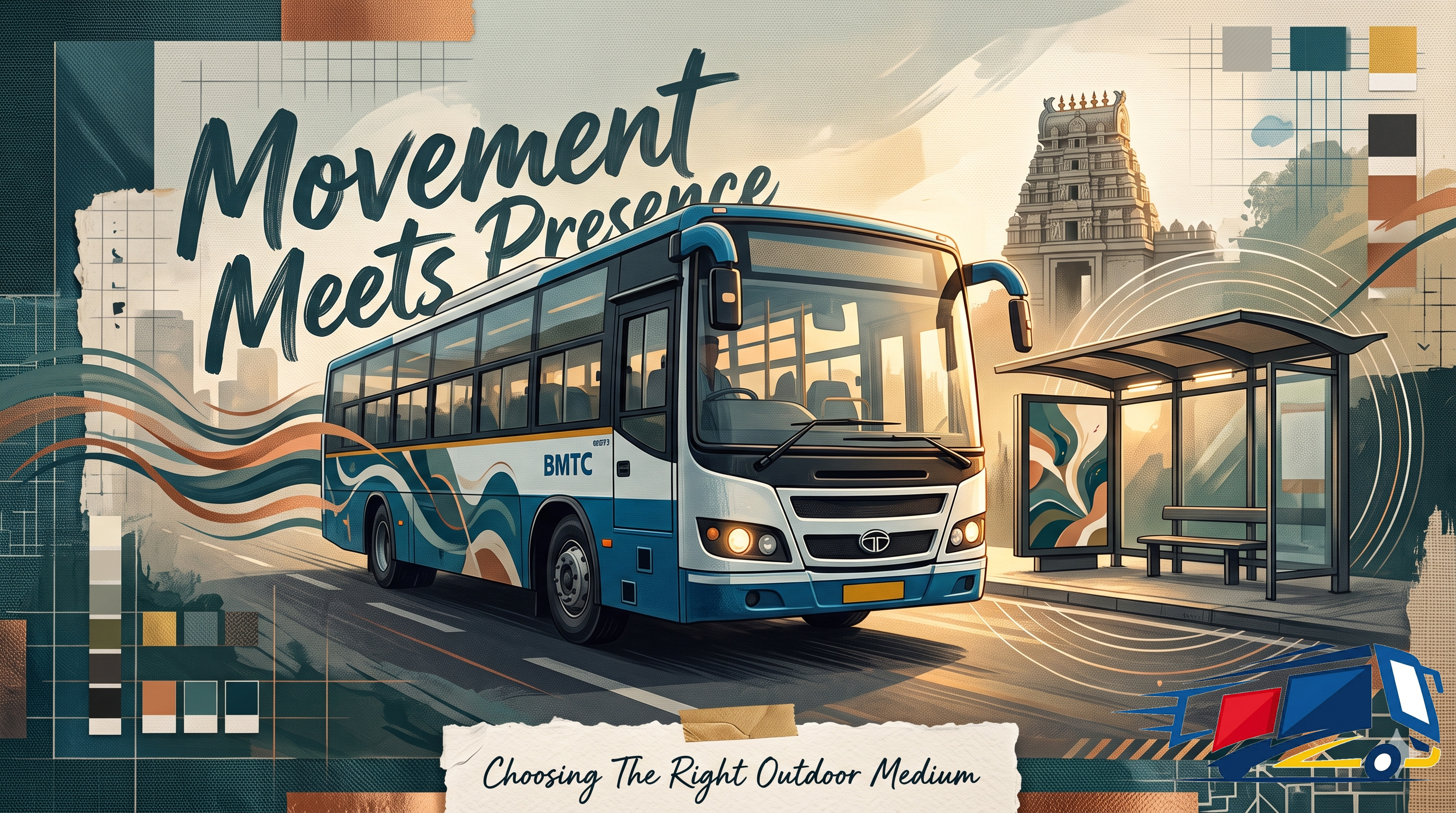
Both put your brand on the street, but they work in opposite ways. Bus branding is moving media: the brand travels the city and finds the audience. Bus-shelter advertising is fixed media: the audience comes to the brand and waits beside it. One spreads, one settles. Here is which fits your goal.
Key takeaways
- Bus branding is moving media: wide, route-based reach as the brand circulates the city.
- Bus-shelter ads are fixed media: hyperlocal, with long dwell time as people wait.
- Branding wins on reach and frequency; shelters win on dwell time and location lock.
- Shelters can be illuminated for 24/7 visibility, including after dark.
- The strongest campaigns often combine both: movement plus a fixed anchor.
The core difference: moving vs fixed
Everything else follows from one fact. A branded bus moves, so it carries your message to many places and many people. A shelter stays put, so it holds your message in one place and lets the audience absorb it.
| Trait | Bus branding | Bus-shelter ads |
|---|---|---|
| Nature | Moving | Fixed |
| Strength | Reach and frequency | Dwell and location |
| Audience | City-wide, on the move | Local, waiting |
| Message | Short, repeated | Can be detailed |
Neither is better in the abstract. The right one depends on whether your goal is to be seen widely as people move, or to be studied closely at a spot that matters to you.
Side by side
Across the measures that decide a media buy, the two trade places. Branding leads on spread and repetition; shelters lead on attention and locking down a location.
| Measure | Bus branding | Bus-shelter ads |
|---|---|---|
| Reach | Wide, route-based | Local to the stop |
| Dwell time | Seconds in passing | Minutes while waiting |
| Location control | Route, not exact spot | Exact, chosen stop |
| Night visibility | Limited | Lit options, 24/7 |
| Message length | Short and bold | Room for detail |
| Best at | Awareness at scale | Hyperlocal recall |
Want your brand on Bengaluru's buses?
Get a route plan, format recommendation and pricing, usually within a minute.
When bus branding wins
Choose bus branding when the goal is broad awareness and frequency: a launch, a city-wide push, or a brand that needs to be seen often across many neighbourhoods.
Movement is the advantage. A single branded bus is seen by different crowds in different parts of the city through the day, so branding builds reach that a fixed site cannot match.
When bus-shelter advertising wins
Choose shelters when location and attention matter more than spread: a hyperlocal push, a store or project nearby, or a message that needs room and a captive, waiting audience.
Shelters excel at being where it counts. Near a store, a tech park or a new project, a shelter lets you advertise on location, with enough dwell time for a detailed message and lit visibility round the clock.
Why many campaigns use both
The two are complements, not rivals. Bus branding builds the broad awareness; shelters anchor it at the places that convert. Used together, movement and fixity reinforce each other.
The bus puts you in front of the whole city. The shelter waits for them at the corner that matters. Run both and you cover the journey and the destination.
Which should you pick?
Start from the goal. Broad awareness leans to branding, hyperlocal recall leans to shelters, and a campaign that needs both is a case for a mix.
| Your goal | Lean toward |
|---|---|
| City-wide awareness | Bus branding |
| Promote a local store or site | Bus shelters |
| Launch with frequency | Bus branding |
| Detailed message, night reach | Bus shelters |
| Awareness plus conversion | Both, combined |
One brief, the right mix of moving and fixed
You do not have to choose blind. Tell us the goal and budget, and we will weigh moving media against fixed: bus branding to spread awareness across the city, bus shelters to anchor it where people decide and buy. Often the answer is a measured mix, and we will plan the split and quote both, so the campaign covers the journey and the destination.
Explore moving media under bus branding in Bengaluru, or plan the full mix with transit advertising.
Frequently Asked Questions
What is the main difference between the two?+
Bus branding is moving media that travels routes for wide reach; bus-shelter advertising is fixed media at one stop with long dwell time. One spreads, one settles.
Which has wider reach?+
Bus branding. A branded bus crosses many neighbourhoods through the day, reaching far more of the city than a single fixed shelter can.
Which is better for a local store or project?+
Bus shelters. A fixed panel near the store advertises on location, with several minutes of dwell time and room for a detailed message.
Do bus shelters work at night?+
Yes, when illuminated. Backlit and lit shelter panels stay visible 24/7, which a moving bus cannot reliably offer after dark.
Can I combine bus branding and shelters?+
Yes, and many campaigns do. Branding builds broad awareness while shelters anchor it at key points, so the two reinforce each other.
How do I choose between them?+
Start from your goal: awareness at scale favours bus branding, hyperlocal recall favours shelters, and a campaign needing both is a case for a mix.
Bus Branding Glossary
- Full bus branding (wrap)
- A full vehicle wrap covering both sides and the rear of the bus, the highest-impact, most visible format.
- Bus back / rear branding
- Advertising on the rear panel of the bus, in the line of sight of traffic queued behind it at signals and junctions.
- Side panel branding
- Branding on one or both side panels of the bus body, facing pedestrians and parallel traffic along the route.
- Vajra / AC service
- BMTC's premium air-conditioned (Volvo / Vayu Vajra) services, carrying a higher-income commuter set on IT and airport corridors.
- TTMC
- Traffic and Transit Management Centre, a large BMTC bus terminal where many routes start, terminate and interchange.
- Depot
- The BMTC facility where buses are parked, serviced and from which many local routes originate.
- Dwell time
- How long a bus stays in view of a stationary crowd, at a stop, signal or in slow traffic, which lengthens brand exposure.
- Corridor
- A main arterial road (e.g. the Outer Ring Road or Hosur Road) that a bus route runs along, defining who sees the branding.
How to run a BMTC bus branding campaign
Five simple steps from enquiry to a live, tracked campaign on Bengaluru's buses.
- 1
Pick your area & audience
Tell us the Bengaluru area or corridor you want to reach and who you're targeting, IT professionals, shoppers, students or residents.
- 2
Choose a format
Select a format, full bus wrap, rear panel, side panel or premium AC/Vajra service, based on your budget and the impact you want.
- 3
Select routes & bus count
We map the high-frequency routes and stops that cover your audience and recommend how many buses to brand.
- 4
Approve the creative
Share your artwork (or we help design it). We prepare it to BMTC specifications and get the approvals.
- 5
Go live & get proof
We print, wrap and deploy the buses, then share proof of display so you can see your brand on the road.
Bus Branding Formats
Choose how your brand rides, pick the format that fits your goal and budget.
Bus Branding Across Bengaluru
We run BMTC bus branding in every major Bengaluru neighbourhood. Explore more areas:
Outdoor & Transit Advertising Specialists
We plan, design and run BMTC bus branding campaigns across every major Bengaluru corridor, matching brands to the routes, formats and audiences that deliver the most visibility.
Discover More
Brand Awareness vs Response Campaigns on Buses
What bus branding does best: awareness or direct response? A comparison of the two campaign types on buses, why a moving vehicle favours brand-building, and how to blend both.
Geo-Targeting With Bus Routes: Advertising Where Your Customers Are
A bus route is a geo-targeting tool you can drive. How to map your customers to the routes they use, think in catchments instead of points, and stack corridors to cover a neighbourhood or a whole city.
Setting Campaign Objectives Before You Advertise
Why setting one clear objective before you advertise decides everything: awareness vs consideration vs response, how each maps to a different message, format and KPI, and how to write a SMART objective.