How Buses Are Wrapped: The Production Process
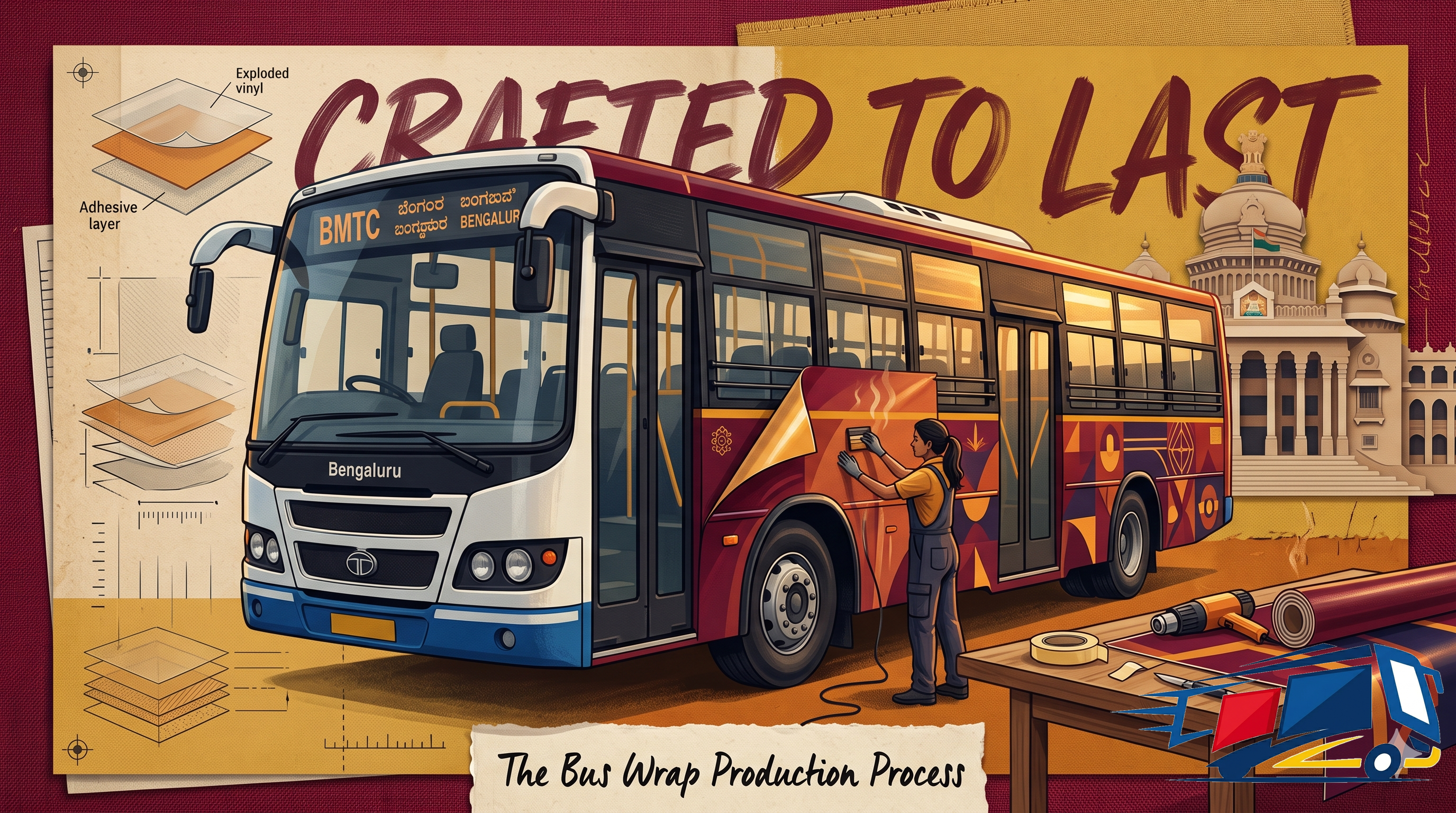
A bus wrap looks simple from the road, but getting it there is a craft. It runs through a chain of careful steps: the right vinyl, printing and lamination, painstaking surface prep, a heat-and-squeegee application, then curing and quality checks. Skip any one and the wrap fails early. Here is how it is really done.
Key takeaways
- Cast vinyl is the premium film: thin, conformable, UV-stable, lasting years.
- The print is laminated to lock in colour and shield it from sun and weather.
- Surface prep is the make-or-break step; vinyl bonds to whatever is on the panel.
- Vinyl is applied with heat and a squeegee, then post-heated to set permanently.
- On buses, emergency exit windows must stay operational, a safety non-negotiable.
It starts with the right vinyl
Not all vinyl is equal. Cast vinyl is the premium choice for buses: it begins as liquid PVC cast onto a carrier sheet, which makes it thin, highly conformable and dimensionally stable, so it hugs curves and holds colour for years.
| Property | Cast vinyl | Calendered vinyl |
|---|---|---|
| Thickness | About 1 to 2 mil | Thicker, stiffer |
| Conformability | High, hugs curves | Lower, flat surfaces |
| Lifespan | 5 to 10 years | Short term |
| Best for | Full bus wraps | Flat, brief campaigns |
The detail that matters: quality films carry built-in UV inhibitors and air-release channels in the adhesive, so colour resists fading and the installer can lay the film without trapping air bubbles.
Printing, then lamination
Your design is printed onto the vinyl with durable inks, left to dry, then sealed under a clear laminate. The laminate is not optional, it is the layer that protects the print from sun, rain and road grime.
- Print. The artwork is printed on the vinyl, commonly with UV or eco-solvent inks.
- Dry and cure the ink. The print is left to dry, often around 24 hours, before lamination.
- Laminate. A clear protective film is bonded over the print to guard colour and finish.
- Out-gas. The laminated panel rests so trapped solvent escapes, preventing later silvering.
Source: print, cure and lamination practice for wrap graphics, 2026. Drying and out-gas times depend on ink load and film.
Want your brand on Bengaluru's buses?
Get a route plan, format recommendation and pricing, usually within a minute.
Surface prep: the make-or-break step
Vinyl sticks to whatever sits on the panel, including dirt, wax and grease. So the bus is cleaned and decontaminated thoroughly before any film touches it, because most wrap failures trace back to poor prep.
A clean, dry, oil-free surface is what lets the adhesive form a strong, even bond. It is the least glamorous stage and the most important, which is why a careful installer never hurries it.
Application: heat, squeegee, patience
The film is positioned, then bonded by working a squeegee outward from the centre to push out air, with a heat gun softening the vinyl so it conforms to curves, rivets and the bus's corrugations without wrinkling.
| Step | What it does |
|---|---|
| Position | Align the panel, often by hinge method |
| Squeegee | Bond from centre out, push air through channels |
| Heat | Soften vinyl to conform to curves and ridges |
| Trim and tuck | Cut to panels and tuck edges to prevent lift |
Curing and the quality check
Application is not the finish line. Stretched areas and edges are post-heated to set the vinyl permanently, the adhesive is left to cure, and the whole bus is inspected before it goes back on the road.
The inspection checks edges, seams and finish, no lifting, no bubbles, clean trims. Only once it passes, and the adhesive has had time to cure, is the bus considered ready for the road and for washing.
Why a good wrap lasts
Durability is built in across the chain: the cast film, the protective laminate, clean prep and proper post-heating all add up to a wrap that holds colour and stays put through sun, rain and daily service.
| Factor | What it protects against |
|---|---|
| Cast film | Shrinking, cracking, lifting |
| Laminate | UV fade, rain, road grime |
| Clean prep | Early peeling and bubbles |
| Post-heat | Edges retracting over time |
Quality you can see, even up close
When your campaign rides the city for weeks, the finish is your brand. That is why the process matters: premium cast film, proper lamination, thorough surface prep, skilled heat-and-squeegee application and a full inspection before any bus leaves. The result is a wrap that looks sharp from across the road and clean up close, holds its colour, and comes off cleanly at the end without harming the bus.
See how campaigns are produced under bus branding in Bengaluru, or explore the wider craft in transit advertising.
Frequently Asked Questions
What material is used to wrap a bus?+
Premium cast vinyl, cast from liquid PVC into a thin, conformable, UV-stable film, sealed under a clear laminate for protection. It is built for curves and long outdoor life.
Why is the print laminated?+
The laminate shields the printed colour from sun, rain and road grime, preventing fading and damage, and adds a clean finish that keeps the wrap looking new.
What is the most important step?+
Surface preparation. Vinyl bonds to whatever is on the panel, so a thorough wash, decontamination and alcohol wipe are what prevent peeling and bubbles later.
How is the vinyl applied?+
With heat and a squeegee: the film is positioned, bonded from the centre outward to expel air, and heated to conform to curves, then post-heated to set it permanently.
Are bus windows covered?+
Window areas use perforated film so passengers see out, and emergency exit windows must stay operational while the driver's vision is never obstructed.
How long does a bus wrap last?+
A quality cast wrap can last 5 to 10 years as a film, well beyond a typical campaign, depending on grade, install quality and conditions, and it removes cleanly afterwards.
Bus Branding Glossary
- Full bus branding (wrap)
- A full vehicle wrap covering both sides and the rear of the bus, the highest-impact, most visible format.
- Bus back / rear branding
- Advertising on the rear panel of the bus, in the line of sight of traffic queued behind it at signals and junctions.
- Side panel branding
- Branding on one or both side panels of the bus body, facing pedestrians and parallel traffic along the route.
- Vajra / AC service
- BMTC's premium air-conditioned (Volvo / Vayu Vajra) services, carrying a higher-income commuter set on IT and airport corridors.
- TTMC
- Traffic and Transit Management Centre, a large BMTC bus terminal where many routes start, terminate and interchange.
- Depot
- The BMTC facility where buses are parked, serviced and from which many local routes originate.
- Dwell time
- How long a bus stays in view of a stationary crowd, at a stop, signal or in slow traffic, which lengthens brand exposure.
- Corridor
- A main arterial road (e.g. the Outer Ring Road or Hosur Road) that a bus route runs along, defining who sees the branding.
How to run a BMTC bus branding campaign
Five simple steps from enquiry to a live, tracked campaign on Bengaluru's buses.
- 1
Pick your area & audience
Tell us the Bengaluru area or corridor you want to reach and who you're targeting, IT professionals, shoppers, students or residents.
- 2
Choose a format
Select a format, full bus wrap, rear panel, side panel or premium AC/Vajra service, based on your budget and the impact you want.
- 3
Select routes & bus count
We map the high-frequency routes and stops that cover your audience and recommend how many buses to brand.
- 4
Approve the creative
Share your artwork (or we help design it). We prepare it to BMTC specifications and get the approvals.
- 5
Go live & get proof
We print, wrap and deploy the buses, then share proof of display so you can see your brand on the road.
Bus Branding Formats
Choose how your brand rides, pick the format that fits your goal and budget.
Bus Branding Across Bengaluru
We run BMTC bus branding in every major Bengaluru neighbourhood. Explore more areas:
Outdoor & Transit Advertising Specialists
We plan, design and run BMTC bus branding campaigns across every major Bengaluru corridor, matching brands to the routes, formats and audiences that deliver the most visibility.
Discover More
Brand Awareness vs Response Campaigns on Buses
What bus branding does best: awareness or direct response? A comparison of the two campaign types on buses, why a moving vehicle favours brand-building, and how to blend both.
Geo-Targeting With Bus Routes: Advertising Where Your Customers Are
A bus route is a geo-targeting tool you can drive. How to map your customers to the routes they use, think in catchments instead of points, and stack corridors to cover a neighbourhood or a whole city.
Setting Campaign Objectives Before You Advertise
Why setting one clear objective before you advertise decides everything: awareness vs consideration vs response, how each maps to a different message, format and KPI, and how to write a SMART objective.