Inside a BMTC Bus: Interior, Seating & Features
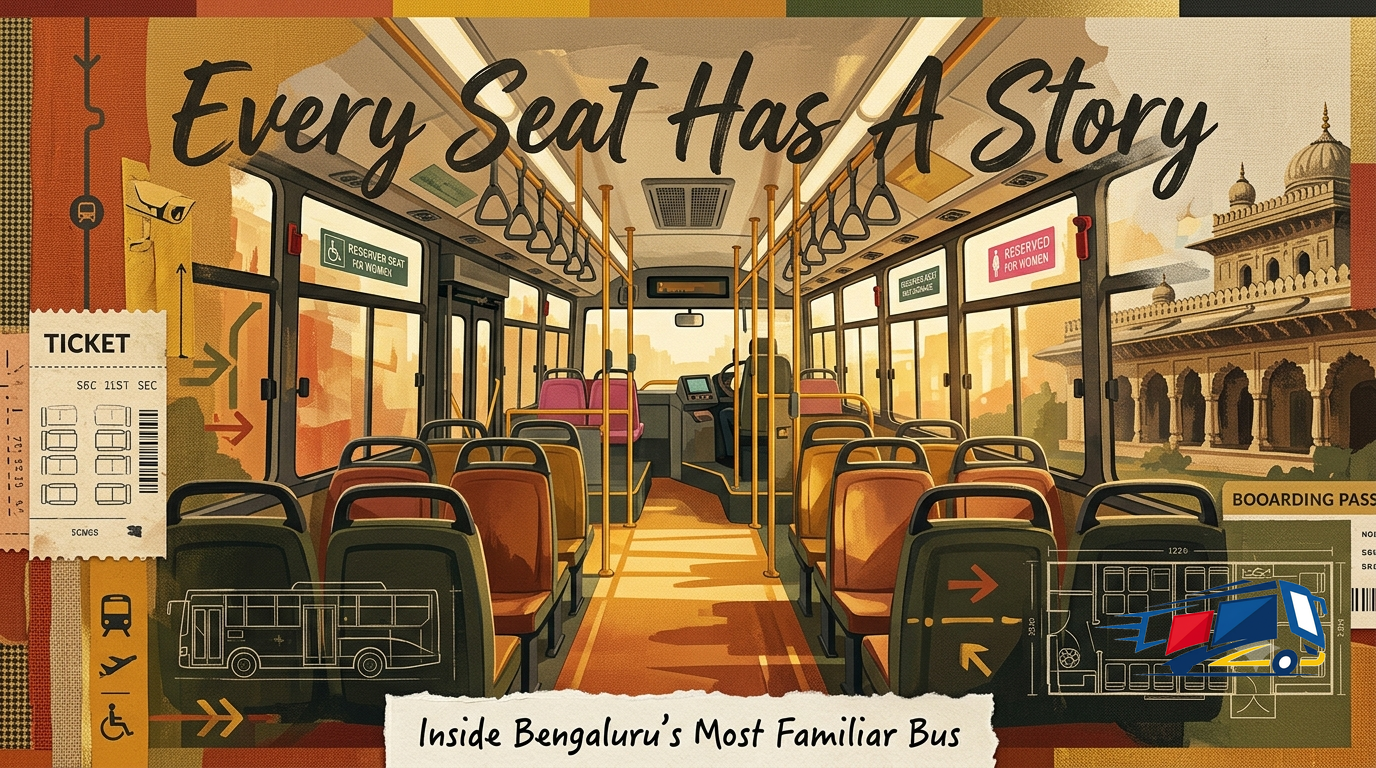
Step inside and a BMTC bus interior is a 2x2 row of seats, a pink reserved section for women, a route board up front and, on newer buses, cameras and a panic button. Here is the full picture of what riding one is like.
Most people picture a BMTC bus from the outside, blue and white on a busy road. Inside, the layout is fairly consistent: a 2x2 seating plan, a clearly marked women's section, space near the door for standees, and a driver and conductor up front. What changes most is whether the bus is air conditioned. A Vajra seats about 37; an airport Vayu Vajra around 25.
| Key fact | Detail |
|---|---|
| Layout | 2x2 seating in most buses |
| Vajra (AC) | ~37 seats, cushioned, AC vents |
| Vayu Vajra | ~25 seats, room for luggage |
| Women's seats | Reserved, marked pink since 2018 |
| On new buses | CCTV, panic button, ramp, GPS |
Layout and seating capacity
Most buses run a 2x2 layout. AC buses seat 25 to 37; ordinary buses seat fewer but carry many standees.
Walk in through the front or centre door and you face two seats on each side of a central aisle. AC buses keep seating modest for comfort, while ordinary buses trade a little seating for a larger standing area, which is why they move so many people at peak hour.
| Type | Layout | Approx seats | Standing |
|---|---|---|---|
| Vajra (AC) | 2x2 cushioned | About 37 | Some at peak |
| Vayu Vajra (airport) | 2x2 cushioned | About 25 | Limited, luggage room |
| Bengaluru Sarige (non-AC) | 2x2 | Roughly 30 to 45 | Large standing area |
| Astra (electric) | 2x2, low floor | Around 30 plus | Yes, with ramp access |
AC vs non-AC interiors
Air conditioning is the biggest interior divide, shaping seating, airflow and how crowded a bus feels.
An AC Vajra feels closer to a coach: sealed windows, individual air vents and softer seats. An ordinary bus is built for throughput, with fans, windows that slide open and plenty of grab rails for the standing crowd. The table sets the two side by side.
| Inside feature | AC (Vajra) | Non-AC (Ordinary) |
|---|---|---|
| Seating | Cushioned 2x2 | Firm 2x2 |
| Ventilation | AC vents, sealed windows | Fans and sliding windows |
| Capacity feel | Lower, fewer standees | Higher, big standing area |
| Fare | Rs 10 to 25 | Rs 3 to 11 |
| Ride feel | Premium, quieter | Basic, busier |
Want your brand on Bengaluru's buses?
Get a route plan, format recommendation and pricing, usually within a minute.
Accessibility and reserved seats
Reserved seats and low floors make the cabin easier to use for those who need it.
Inside, a block of seats near the front is set aside for women and marked pink, a step BMTC rolled out from 2018 so the section is unmistakable. Other seats are reserved for senior citizens and differently abled passengers. Many buses sit low to the road, and several kneel at the stop, dropping the entry step almost to kerb height for easier boarding.
Note: reserved-seat counts vary by bus model, and the pink-seat rollout has been phased across the fleet.
Safety and tech features inside
Newer and electric buses carry CCTV, panic buttons, GPS and electronic ticketing.
The cabin has grown smarter over the last few years. BMTC's recent electric buses come fitted with cameras, an emergency panic button, real-time GPS and Intelligent Transport System hardware, while conductors across the fleet issue tickets on electronic machines. A lit route board tells you where the bus is headed.
| Feature | What it does | Where |
|---|---|---|
| CCTV cameras | In-cabin safety monitoring | Electric and newer buses |
| Panic button | Emergency alert | Electric and newer buses |
| Wheelchair ramp | Step-free boarding | Low-floor electric buses |
| GPS and ITS | Live tracking and timing | Rolling out fleetwide |
| LED route board | Destination display | Most buses |
| Electronic ticketing | Digital tickets and passes | Fleetwide |
A rider is seated or standing for twenty minutes or more with little to look at but the inside of the bus. That captive, repeated attention is what makes the interior such a quietly powerful surface.
The rider eyeline: interior panels
Every surface a seated rider faces is space a brand can own for the length of the trip.
Here is where the inside of the bus becomes interesting for advertisers. Unlike a hoarding glimpsed for a second, an interior panel sits in front of the same rider for the whole journey, trip after trip. The map below shows which surfaces carry messages and why each one works.
| Surface | Why it works |
|---|---|
| Above-window panels | Run along the seated rider's natural eyeline |
| Back-of-seat panels | Faced directly by the passenger behind |
| Grab-handle danglers | Sit at standing-passenger eye level |
| Window vinyls | Seen from inside and by people outside |
| Front partition | Faces the whole saloon |
If interior space fits your brand, our bus branding solutions plan interior panels alongside exterior wraps. You can also see which bus type reaches which audience, or pick an area such as Koramangala.
Frequently Asked Questions
How many seats are in a BMTC bus?+
A Vajra AC bus seats about 37 and a Vayu Vajra airport bus around 25. Ordinary non-AC buses seat roughly 30 to 45 depending on the model, with extra room for standing riders, all in a 2x2 layout.
Are BMTC buses low floor?+
Many are. Several buses kneel at the stop to bring the entry step close to the kerb, and newer electric buses carry ramps for wheelchair users, making step-free boarding much easier.
What are the pink seats in BMTC buses?+
The pink seats are reserved for women. BMTC began colouring the women's section pink from 2018 so it is easy to identify, alongside seats kept for senior citizens and differently abled passengers.
Do BMTC buses have CCTV and panic buttons?+
Yes. The newer and electric buses are fitted with CCTV cameras, panic buttons, GPS tracking and Intelligent Transport System hardware, part of ongoing safety upgrades across the fleet.
What is the difference between AC and non-AC interiors?+
AC Vajra buses have cushioned 2x2 seating, air vents and fewer standees. Non-AC buses use fans and sliding windows, seat in a similar layout but carry many more standing passengers, and cost less to ride.
Are there advertisements inside BMTC buses?+
Yes. The interior carries advertising on surfaces such as above-window panels, back-of-seat panels and window vinyls, placed in the rider's eyeline through approved transit advertising.
Bus Branding Glossary
- Full bus branding (wrap)
- A full vehicle wrap covering both sides and the rear of the bus, the highest-impact, most visible format.
- Bus back / rear branding
- Advertising on the rear panel of the bus, in the line of sight of traffic queued behind it at signals and junctions.
- Side panel branding
- Branding on one or both side panels of the bus body, facing pedestrians and parallel traffic along the route.
- Vajra / AC service
- BMTC's premium air-conditioned (Volvo / Vayu Vajra) services, carrying a higher-income commuter set on IT and airport corridors.
- TTMC
- Traffic and Transit Management Centre, a large BMTC bus terminal where many routes start, terminate and interchange.
- Depot
- The BMTC facility where buses are parked, serviced and from which many local routes originate.
- Dwell time
- How long a bus stays in view of a stationary crowd, at a stop, signal or in slow traffic, which lengthens brand exposure.
- Corridor
- A main arterial road (e.g. the Outer Ring Road or Hosur Road) that a bus route runs along, defining who sees the branding.
How to run a BMTC bus branding campaign
Five simple steps from enquiry to a live, tracked campaign on Bengaluru's buses.
- 1
Pick your area & audience
Tell us the Bengaluru area or corridor you want to reach and who you're targeting, IT professionals, shoppers, students or residents.
- 2
Choose a format
Select a format, full bus wrap, rear panel, side panel or premium AC/Vajra service, based on your budget and the impact you want.
- 3
Select routes & bus count
We map the high-frequency routes and stops that cover your audience and recommend how many buses to brand.
- 4
Approve the creative
Share your artwork (or we help design it). We prepare it to BMTC specifications and get the approvals.
- 5
Go live & get proof
We print, wrap and deploy the buses, then share proof of display so you can see your brand on the road.
Bus Branding Formats
Choose how your brand rides, pick the format that fits your goal and budget.
Bus Branding Across Bengaluru
We run BMTC bus branding in every major Bengaluru neighbourhood. Explore more areas:
Outdoor & Transit Advertising Specialists
We plan, design and run BMTC bus branding campaigns across every major Bengaluru corridor, matching brands to the routes, formats and audiences that deliver the most visibility.
Discover More
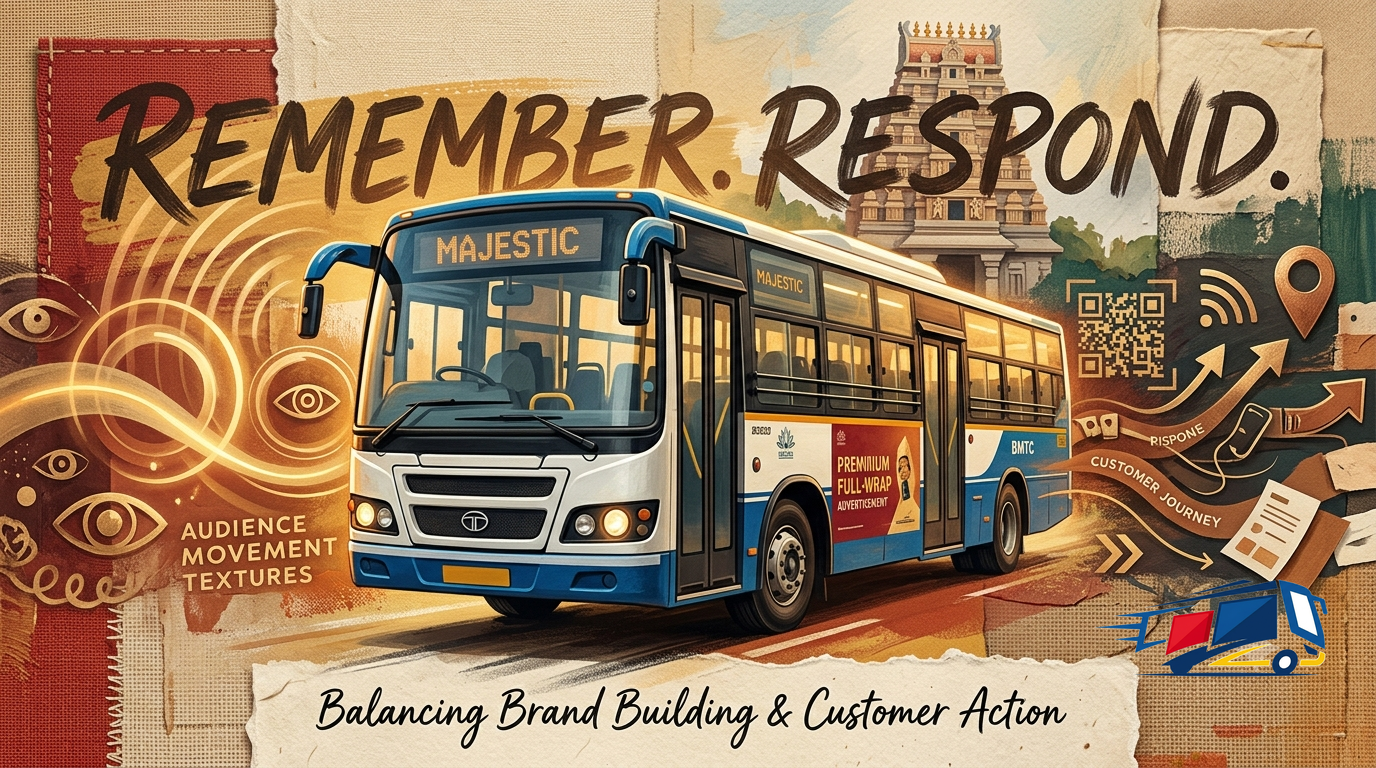
Brand Awareness vs Response Campaigns on Buses
What bus branding does best: awareness or direct response? A comparison of the two campaign types on buses, why a moving vehicle favours brand-building, and how to blend both.
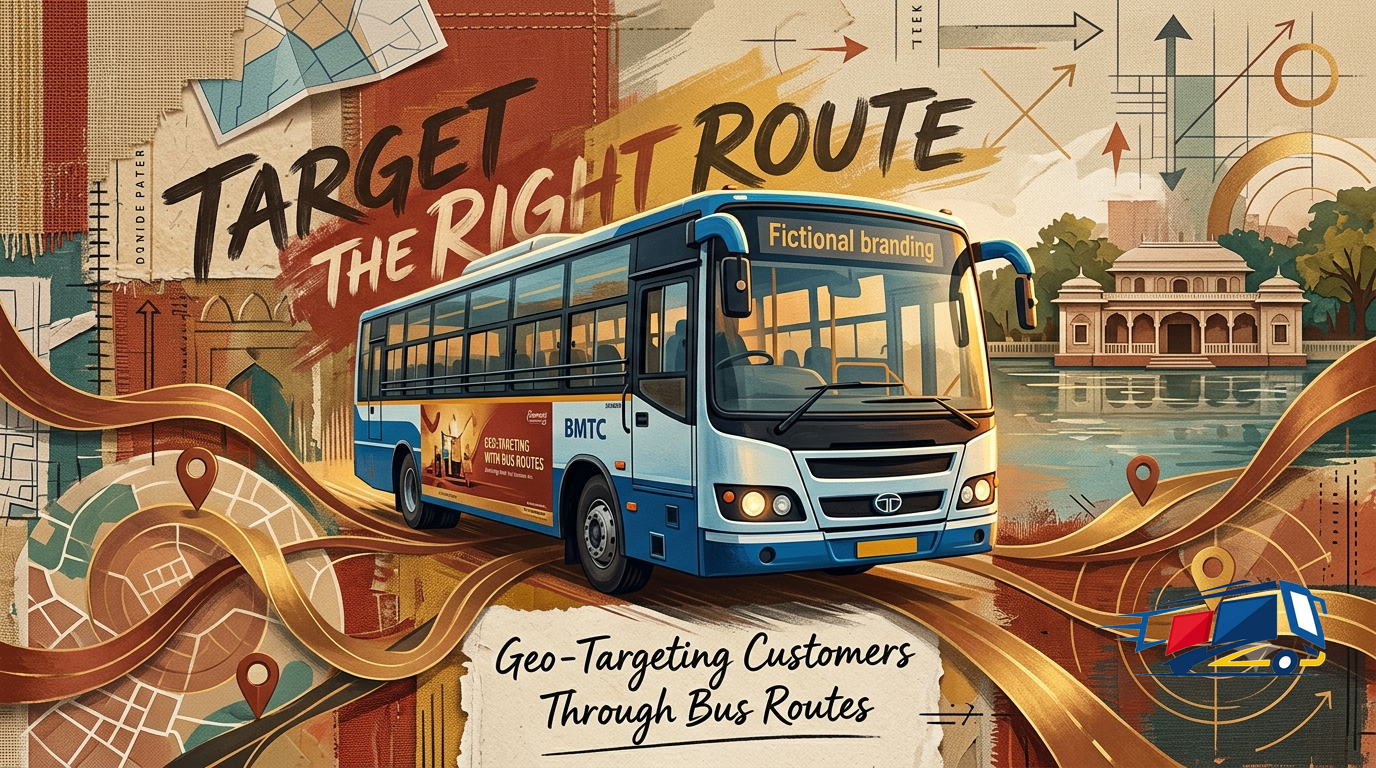
Geo-Targeting With Bus Routes: Advertising Where Your Customers Are
A bus route is a geo-targeting tool you can drive. How to map your customers to the routes they use, think in catchments instead of points, and stack corridors to cover a neighbourhood or a whole city.
Setting Campaign Objectives Before You Advertise
Why setting one clear objective before you advertise decides everything: awareness vs consideration vs response, how each maps to a different message, format and KPI, and how to write a SMART objective.